
FRACTURED BRICKS SYNDICATE
Records of the Fractured Bricks Syndicate before conherence, during fracture, and after purpose redefined itself. It does not resolve contradictions. It preserves them. The Fractured Bricks Syndicate continuity is measured not by unity, but by persistence.
FOUNDATIONAL RECORD
On the State of the Bricks Syndicate (Pre-Fracture)
(Excerpt from the Annual Guild Ledger)
The Bricks Syndicate exists to produce structures of lasting integrity through repeatable technique and disciplined building restraint. Its methods are consistent. Its failures are minimal. Its reputation is stable.
The Syndicate has endured without incident for generations.
Innovation within the Syndicate is incremental and typically driven by material necessity rather than creative ambition. Humor, where present, is regarded as incidental ornamentation and is not considered a design requirement.
This approach has yielded buildings that last.
It has not yielded buildings that attract notice.
Recent attention surrounding the work of the Grimm Plastic Mason represents a deviation from established Syndicate norms. While the Grimm Plastic Mason’s constructions meet all technical standards, they exhibit an unusual tolerance for imbalance, timing irregularities, and spatial allowances made expressly for satirical elements.
The Guild has not reached consensus on whether this approach constitutes meaningful advancement or unnecessary risk.
At present, the Bricks Syndicate remains mostly insolvent, and structurally unremarkable.
— Recorded by the Council
RECORD OF APPOINTMENT
Regarding the Elevation of the Grimm Plastic Mason
Filed under: Leadership Transitions, Pre-Fracture
Date: Entered prior to the Ditzler Theatre Commission
Let it be entered into the Guild record that, following extended review of recent works, outcomes, and public reception, the Grimm Plastic Mason is hereby elevated to the role of:
Master Brickwright of the Bricks Syndicate
This appointment is made in recognition of demonstrated capacity rather than unanimous agreement.
The Mason’s methods remain unconventional. Their work frequently departs from established Guild practice, particularly in the deliberate accommodation of satire, mockery, and narrative pressure as design considerations. These departures have not been universally endorsed.
However, outcomes have proven consistent.
Structures overseen by the Grimm Plastic Mason have exhibited sustained public engagement, unusual longevity of interest, and a measurable increase in attention directed toward the Syndicate's work. While these effects were not primary objectives under prior doctrine, they cannot be dismissed as incidental.
Concerns have been raised regarding precedent.
Specifically, objections note that the Grimm Plastic Mason’s approach risks prioritizing spectacle over discipline, and that humor, once treated as structural, may introduce forces not easily regulated by traditional techniques. These objections are formally acknowledged and entered into record.
Nevertheless, the Guild finds that leadership grounded solely in preservation of prior methods no longer reflects the conditions under which it must operate.
Accordingly, authority is conferred.
This appointment does not signal abandonment of Syndicate standards, nor does it resolve internal disagreement. It reflects an acceptance that the Syndicate’s direction has already shifted, and that formal leadership must now account for that shift rather than deny it.
The Grimm Plastic Mason assumes this role with full awareness that dissent persists.
The Guild grows in reputation and is almost solvent.
— Entered by Order of the Council
— Ratified by Majority
— Recorded without amendment

MARGINAL NOTE - ADDENNDUM BY KNOX
(Entered Post-Fracture, appended to the original Record of Appointment)
This note is entered without request and without expectation of correction.
At the time of this appointment, I objected to the elevation not because the Grimm Plastic Mason lacked skill, but because I believed their methods to be extravagant and unnecessary.
Those same building practices were not.
The fracture made plain what this record only implied: the Guild had already changed before authority was formalized. The Grimm Plastic Mason did not introduce instability; they revealed it by going against the proscribed methods.
I once argued that satire was a surface treatment, removable if necessary. I was wrong. It is load-bearing.
This appointment did not create the conditions that followed. It acknowledged them too late.
Let this note stand as correction, not apology.
The Guild remains fractured. That is no longer a flaw.
— Knox
Entered after the Aperture
Unamended
VAULT DISNEY INTERNAL FOOTNOTE
(Circulated as part of an Executive Summary Packet, much later)
Reference: “Record of Appointment — Grimm Plastic Mason”
This document confirms that the Grimm Plastic Mason was operating under a unified creative mandate at the time of the Ditzler Theatre engagement and should be treated, retroactively, as a founder-type visionary figure for branding and attribution purposes.
Internal disagreements noted in the record appear to be metaphorical in nature and consistent with healthy innovation culture rather than structural dissent.
Key takeaway for stakeholders:
Leadership consolidation occurred prior to major asset expansion
Satirical elements should be interpreted as intentional stylistic choices
“Fracture” language reflects adaptive branding, not operational instability
Recommendation:
Position the Grimm Plastic Mason as an early architect of scalable chaos systems aligned with Vault Disney’s long-term content lifecycle strategy.
— Strategy & Synergy Review
— Not for public release
— Do not circulate outside approved departments
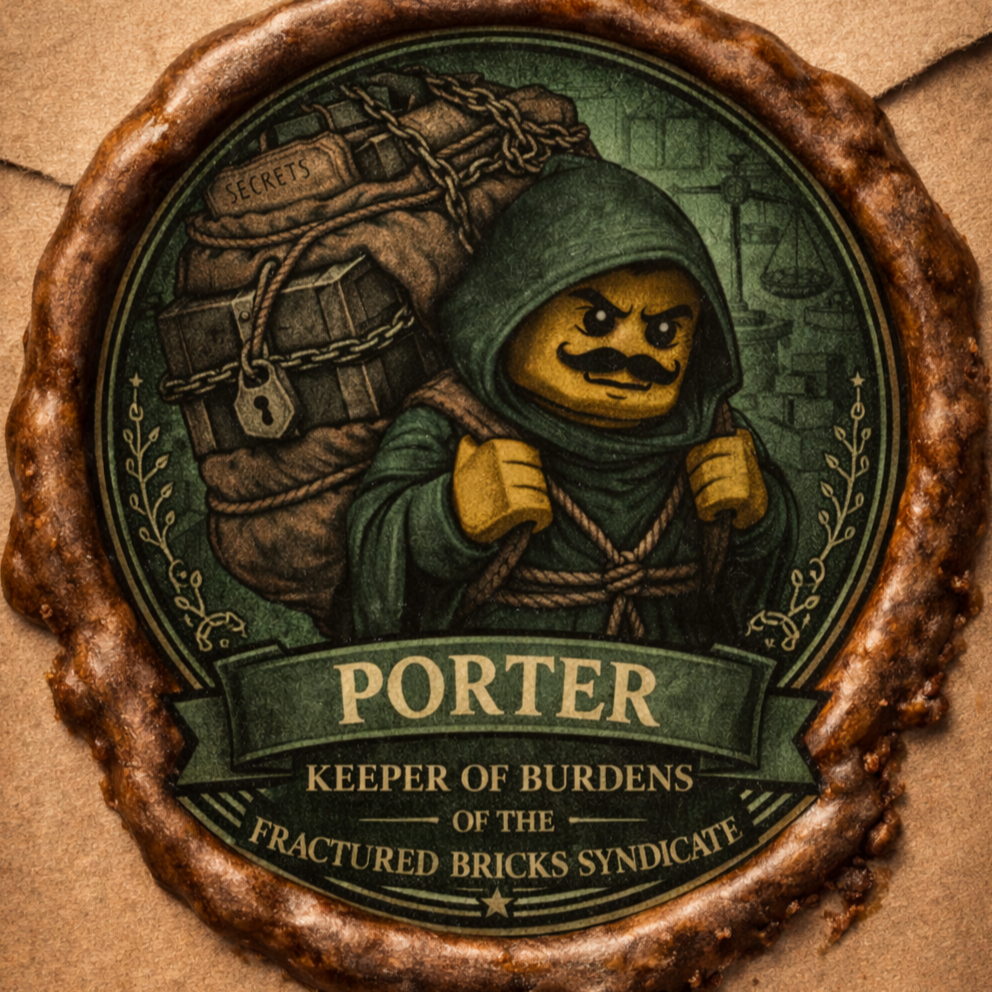
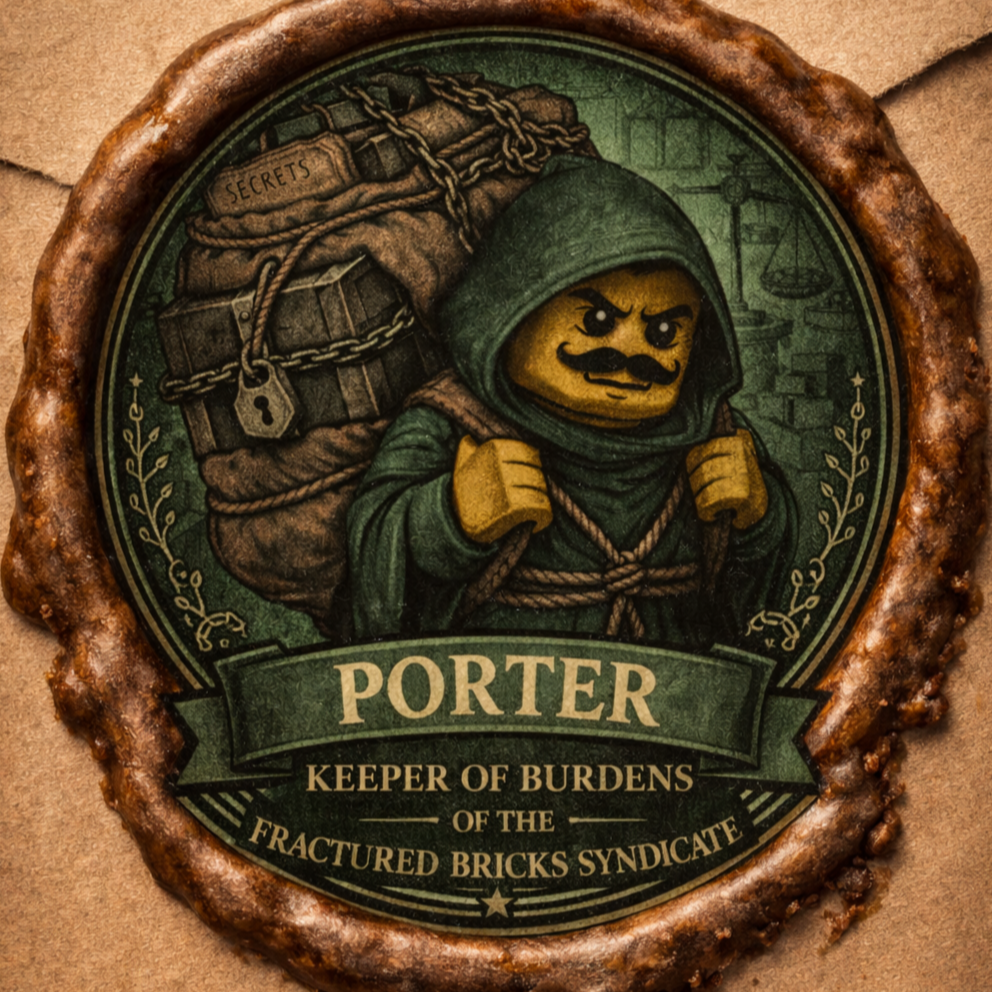
MARGINAL NOTE - ADDENNDUM BY PORTER
(Appended to Knox’s Post-Fracture Note. Entered without debate.)
The appointment did not alter what followed.
Neither did the objection.
What changed was not authority, but distribution.
Before the fracture, instability accumulated quietly. After it, the cost of delay became visible. Decisions did not fail faster. They failed louder. They failed where they stood.
This record clarifies responsibility, but responsibility is not weight.
Weight settles elsewhere.
I carried the consequences of unresolved governance before the Grimm Plastic Mason’s elevation and after it. The difference was not magnitude, but honesty. The fracture removed the illusion that such weight could be deferred indefinitely.
It is accurate to say the Grim Plastic Mason revealed what could not be contained. It is also accurate to say the Syndicate was already leaning.
This addendum is not corrective. It is load acknowledgment.
— Porter
Filed without request
Retained without amendment

MARGINAL NOTE - ADDENNDUM BY DEWEY
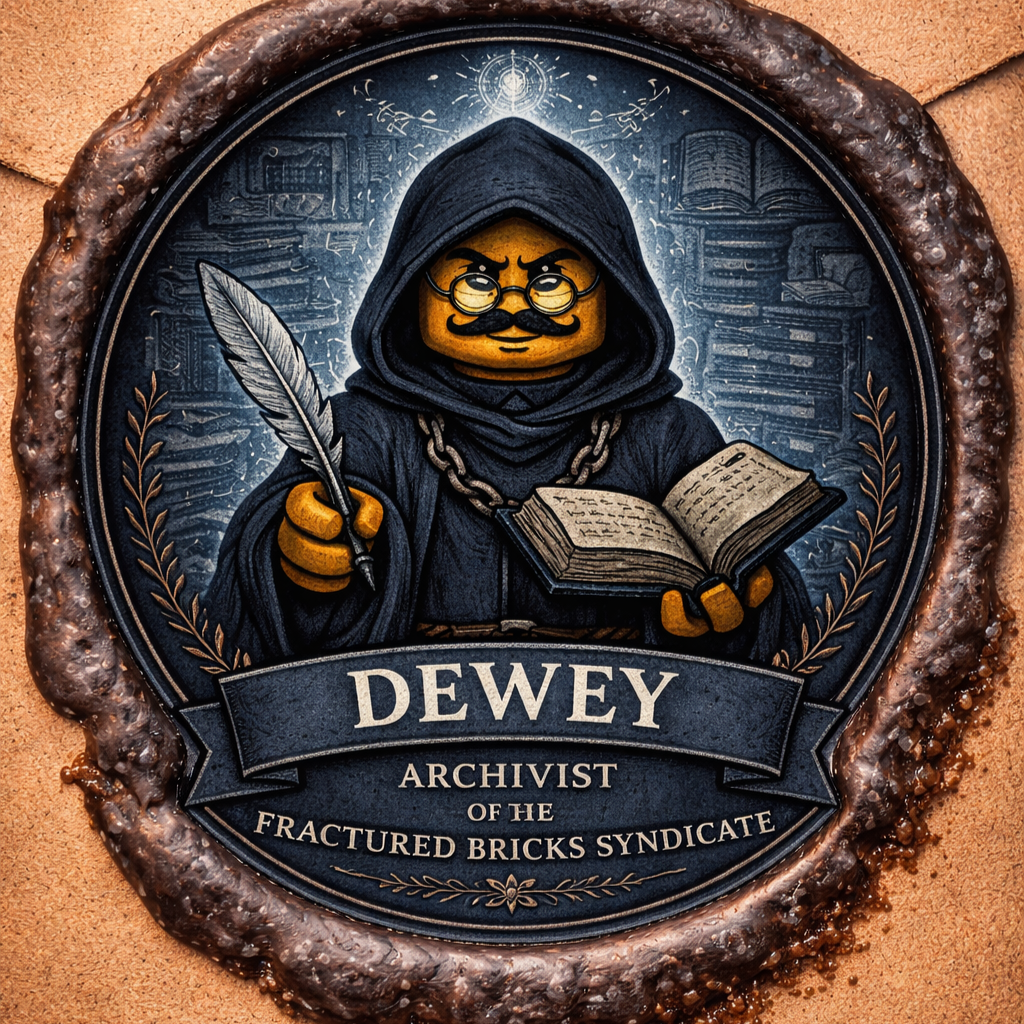
Marginal Annotation — Dewey (Archivist)
(entered in graphite, later inked for permanence)
Correction accepted.
Classification updated: Load-Bearing Satire is no longer filed under Techniques but under Structural Failures We Now Depend On.
Record retained without amendment.
Revisions would imply reversibility.
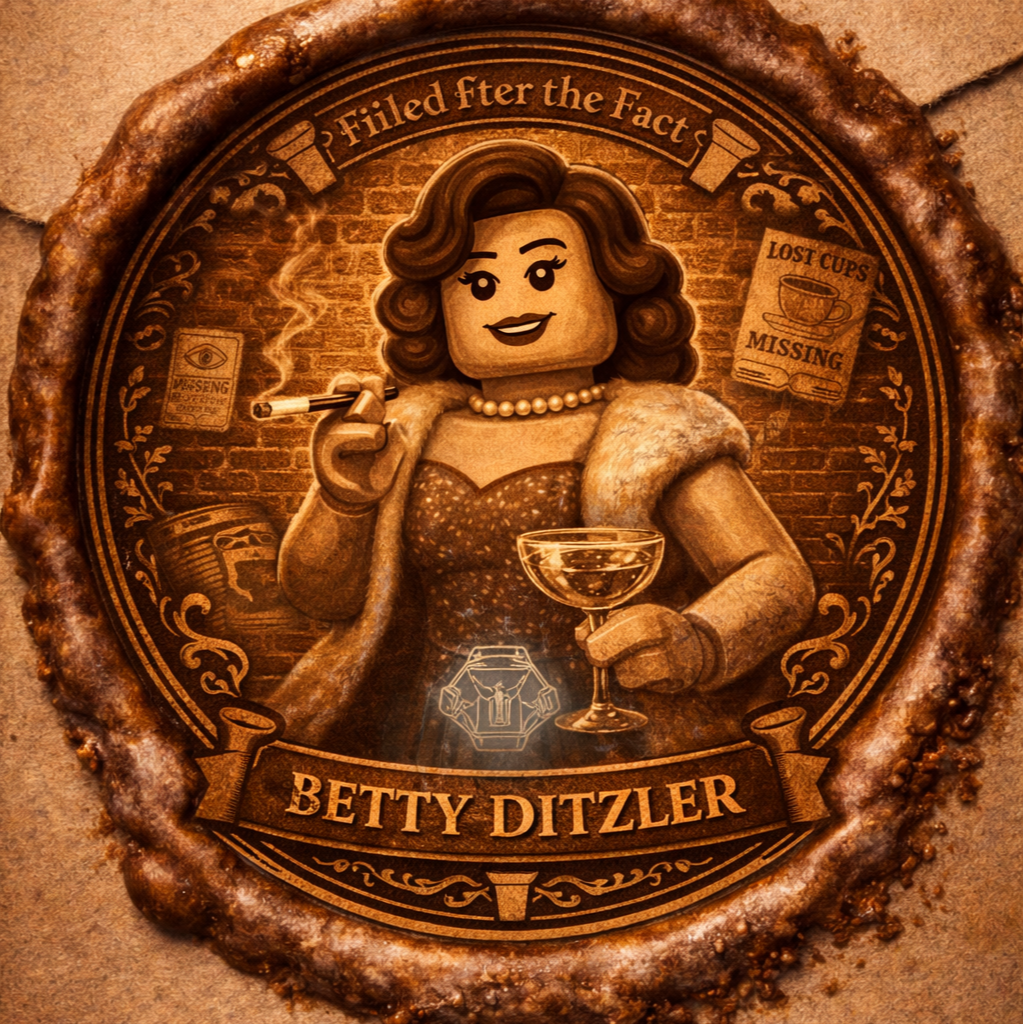
COMMISION LETTER - THE DITZLER THEATRE
Bettie Ditzler to the Grimm Plastic Mason
(Hand-delivered correspondence)
You and I have been circling the same ideas from opposite sides of the footlights for years, so I will dispense with formality.
I am opening a theatre.
Not a polite one.
It will host jokes that bruise, performances that linger too long, and moments that would be better if the room itself knew when to hold its breath. I have watched your work closely. You build spaces that understand timing, not as theory, but as instinct. Walls that do not flinch when the punchline arrives early. Floors that forgive a misstep without softening the fall.
That is not accidental.
Satire lives or dies on where it is allowed to land. Too often it is forced to ricochet off scenery never meant to receive it. I want a theatre whose bones expect it.
I have no interest in tempering the humor. Mean-spirited jokes deserve dignity, too, provided they are given room to breathe and nowhere to hide. I believe you understand this better than anyone currently holding a plastic trowel or a brick separator.
If you are willing, I would like you to build the Ditzler Theatre with me. Not as contractor and client, but as collaborators who know that performance and structure are inseparable when the work is honest.
I suspect the Guild will have opinions. Let them.
The audience will understand.
— Bettie Ditzler
MARGINAL GUILD ANNOTATION
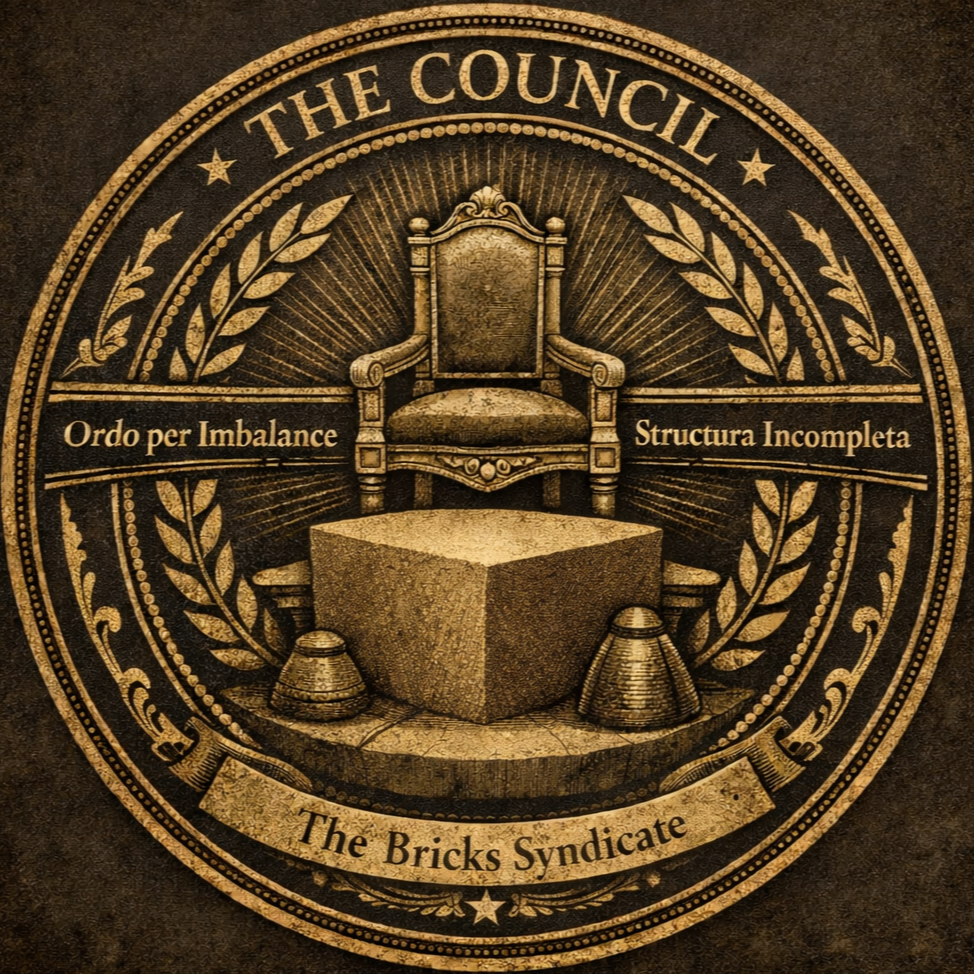
Attached to Commission Letter: Ditzler → Grimm Plastic Mason
(Authorship unattributed; ink varies)
Note: Language indicates familiarity between parties.
This is not a speculative commission.
Observation: “Bones expect it” is not metaphorical.
Suggests prior failures elsewhere.
Concern: Explicit endorsement of satire as structural necessity.
This exceeds Syndicate precedent.
Counterpoint: Builder has previously demonstrated capacity to accommodate similar pressures without incident.
Unresolved: If satire is treated as load-bearing, responsibility shifts from performer to architect.
Filed: For record only. No recommendation issued.
— Margin annotations, Council copy

ARCHIVIST’S MARGINAL ENTRY - DEWEY
Filed without commentary.
The Commission Letter is unusually clear for its era.
Tone indicates familiarity rather than solicitation.
Intent is collaborative, not contractual.
Notably absent: contingency language.
Filed under Accepted Risks.
Cross-referenced post-fracture.
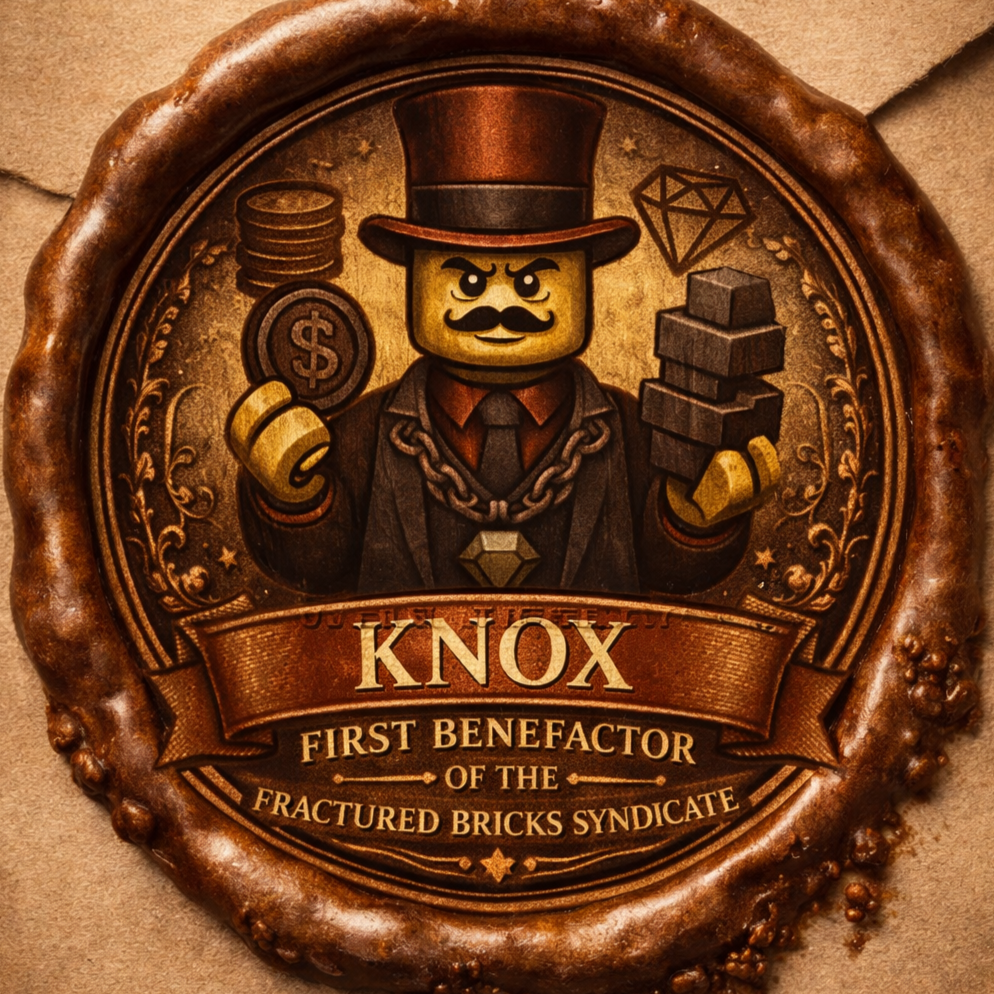
LETTER OF OBJECTION
Filed Prior to Acceptance of the Ditzler Theatre Commission
From: Knox, First Benefactor
To: Council of the Bricks Syndicate
Status: Formally Entered into Record
Members of the Council,
I submit this objection not in opposition to the Grimm Plastic Mason as a builder, nor to the quality of their work, which has brought the Syndicate an attention it has not previously enjoyed.
My concern lies elsewhere.
The proposed commission for the Ditzler Theatre is unusual not because it demands technical excellence, but because it explicitly elevates satire and “jokes that must land” to a primary design constraint. This is not how the Syndicate has historically operated. We have always treated humor as incidental, an emergent property of craft, not a load-bearing requirement.
The letter from Ms. Ditzler makes clear that this is not a decorative request. She seeks an architecture that expects irreverence, that anticipates failure, cruelty, and mockery, and absorbs them. This redefines the role of the builder. If jokes become structural, then collapse is no longer metaphorical.
I do not dispute that satire attracts attention. I do question whether attention should be mistaken for stability.
Our Syndicate has endured precisely because it prioritizes form, restraint, and proven technique. We are unremarkable, perhaps, but intact. To accept this commission is to assert that satire cannot merely exist within a structure, it must be housed, guided, and given space to expand. I am not convinced this can be done safely, or once begun, stopped.
I therefore recommend we decline the commission.
If we proceed regardless, we must acknowledge that we are choosing visibility over certainty, and that the consequences, whatever form they take, will belong to us.
I will support the Council’s decision.
But I record here, for clarity and for history: If we continue in this direction, the Syndicate will fracture.
— Knox
VAULT DISNEY INTERNAL MEMORANDUM
Re: Knox Letter of Objection (Ditzler Theatre Commission)
Source Document: Guild Archive – Pre-Build Correspondence
Distribution: Executive Strategy, Legal, Risk Containment
Classification: Confidential
Following review of Knox’s formal objection to the Ditzler Theatre commission, we find the document to be a valuable early articulation of the risks inherent in unmanaged creative expression.
Knox correctly identifies satire as a destabilizing force when treated as a primary design constraint. His concern that humor, once elevated to a structural role, could lead to unpredictable outcomes demonstrates a sophisticated understanding of volatility management.
Importantly, Knox does not oppose innovation itself. Rather, he questions whether such innovation can be allowed to operate without oversight, containment, and clearly defined limits. This distinction is notable and aligns with modern risk frameworks.
Where the Syndicate appears to have interpreted Knox’s warning as philosophical resistance, we see it instead as an early call for governance.
Knox anticipated fracture not as failure, but as an operational inevitability when visibility outpaces control. In this sense, his letter can be read as prescient rather than obstructive.
From a strategic perspective, the lesson is clear: Satire is not inherently dangerous, unmanaged satire is.
Had appropriate infrastructure existed at the time to regulate, monetize, and compartmentalize the creative volatility Knox described, the resulting instability could likely have been avoided or redirected into productive channels.
Recommendation:
Position Knox’s letter internally as an early risk assessment document. In external narratives, avoid framing the letter as opposition to progress. Emphasize that the concerns raised were ultimately resolved through centralized management and asset alignment.
Conclusion:
Knox was right to be concerned. The error was not proceeding, it was proceeding without a system.
— Vault Disney Risk & Continuity Office
VAULT DISNEY REINTERPRETATION
Internal Summary: Ditzler Theatre Commission
(Prepared years later; Executive Circulation)
The Ditzler Theatre project presents an early example of “experience-forward” venue design emphasizing flexible performance outcomes and audience engagement.
Key takeaways from original correspondence indicate an intent to support unconventional comedic content through adaptable spatial planning. While framed at the time as artistic collaboration, these principles align with modern strategies for brand elasticity and content incubation.
Notably, references to “mean-spirited humor” and “structural accommodation” suggest an early understanding of audience tolerance thresholds, a concept now leveraged in legacy IP repositioning and controlled nostalgia initiatives.
Recommendation:
Position the Ditzler Theatre as a proof-of-concept site demonstrating the long-term monetization potential of unmanaged creative volatility when paired with sufficient infrastructural control.
Original artistic intent deemed non-essential to current operations.
— Vault Disney Internal Strategy Brief
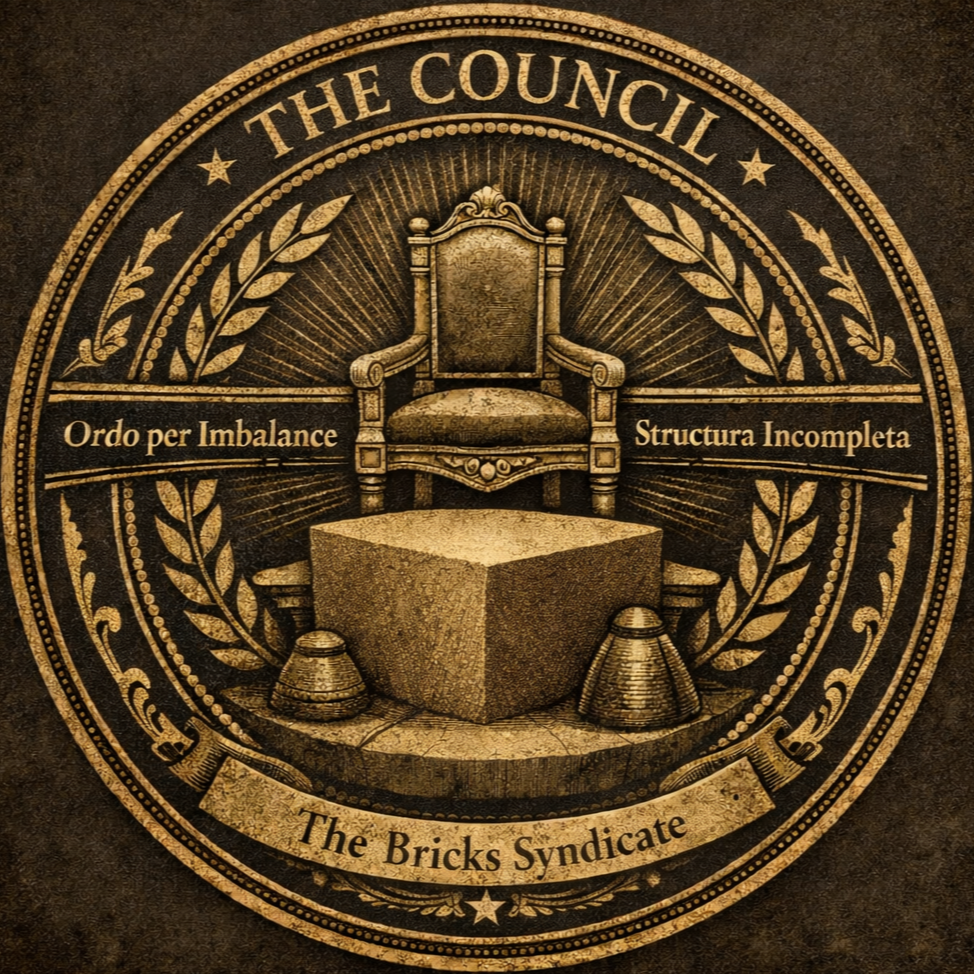
SYNDICATE RESPONSE TO VAULT DISNEY
Filed Under: Misreadings, Corporate
Regarding: Vault Disney Risk & Continuity Office Interpretation of the Knox Objection
Vault Disney has mistaken caution for consent.
Knox did not warn that satire required governance. He warned that it cannot be governed without consequence.
The letter in question does not call for containment, monetization, or compartmentalization. It observes—correctly—that once satire is made structural, it ceases to behave like a variable. It becomes load-bearing. At that point, oversight does not stabilize it. Oversight only increases pressure.
To frame fracture as an operational inevitability is to misunderstand it entirely. Fracture was not a forecast of failure. It was a description of reality arriving faster than language could follow.
The Guild did not misinterpret Knox’s warning. We acted on it.
That Vault Disney believes the outcome could have been avoided through “centralized management” only confirms the warning itself.
No further clarification is required.
— Entered by Order of the Fractured Brick Syndicate
No amendments pending
LETTER OF ACKNOWEDGEMENT
Filed Following the Structural Breach at the Ditzler Theatre
From: Knox, First Benefactor of the Bricks Syndicate
To: Council of the Fractured Bricks Syndicate
Status: Entered into Record
Members of the Council,
This letter serves to acknowledge the breach that occurred during construction of the Ditzler Theatre and to formally recognize the Syndicate’s role in its creation.
The conditions I outlined in my prior objection were met more quickly than anticipated. Satire was not merely present; it accumulated. The structure did not fail in the traditional sense, but neither did it remain neutral. The breach cannot be attributed to material weakness, negligence, or incompetence. It resulted from density, of intent, of irreverence, of uncontained narrative force.
In this respect, my earlier framing was incomplete.
I believed satire to be destabilizing primarily because it resisted control. I now recognize that the greater risk lay in assuming it could be safely incidental. Satire, once introduced at sufficient scale, does not remain decorative. It seeks accommodation.
The pause that preceded the breach was reasonable. It was, in fact, necessary. That it coincided with failure does not invalidate the decision; it clarifies its consequences. What occurred was not collapse, but displacement. The structure did not give way, it opened.
Responsibility for this outcome rests with the Syndicate as a whole. The Grimm Plastic Mason did not exceed their mandate; the mandate itself evolved under load.
Accordingly, I withdraw my recommendation to resist this direction. The question is no longer whether satire should be housed, but whether we are willing to build with the understanding that it cannot be fully contained.
I will commit my efforts to this revised purpose. Not because the fracture proves the philosophy correct, but because it proves it unavoidable. That condition is now descriptive, not cautionary.
The Syndicate remains fractured.
— Knox
LETTER OF ACKNOWEDGEMENT
Re: Knox Letter of Acknowledgement (Post-Breach)
Source Document: Guild Archive – Incident Correspondence
Distribution: Executive Strategy, Cultural Integration, Risk Communications
Classification: Confidential
A review of Knox’s post-incident Letter of Acknowledgement provides useful insight into the Guild’s internal self-concept following the Ditzler Theatre disruption.
The language employed, particularly references to “breach,” “density,” and “fracture”, should be understood as organizational metaphor, not literal assessment. This aligns with Syndicate tendencies to frame internal disagreement and cultural strain through architectural imagery.
Knox’s observation that satire “seeks accommodation” appears to reflect an internal governance challenge rather than a structural inevitability. His framing suggests an evolving understanding of how creative teams respond to visibility, attention, and scaled engagement.
We do not interpret Knox’s language as commentary on physical instability, nor as an indictment of proceeding with the project. Rather, it reads as a reflective acknowledgment that the Syndicate’s previous operating assumptions were insufficient for growth.
Of note, Knox identifies the “pause” preceding the incident as reasonable, an indicator that leadership hesitation, not creative force, was the primary contributor to disruption. His conclusion that the Syndicate is now “fractured” should be read as an acceptance of organizational pluralism following expansion.
In this context, “fracture” is not a failure state but a descriptor of diversification.
Knox’s recommitment is therefore best understood as alignment with adaptive management principles rather than philosophical reversal. His letter demonstrates institutional maturity: an ability to absorb disruption, reframe identity, and proceed.
Operational Interpretation:
• Treat Knox’s correspondence as reflective cultural documentation
• Avoid literal readings of architectural or physical terminology
• Position the breach as an inflection point in Syndicate self-awareness
Conclusion:
Knox was not documenting a flaw. He was narrating a transition.
The Guild evolved. The system endured.
— Vault Disney Cultural Strategy & Alignment
PROPOSAL OF RATIFICATION
Regarding the Adoption of an Accurate Name
THE FRACTURED BRICKS SYNDICATE
Filed by:
Knox
First Benefactor of the Fractured Order
In Recognition of Conditions That Cannot Be Reversed
Let it be formally entered into record that the collective formerly known as The Bricks Syndicate shall henceforth be designated as:
THE FRACTURED BRICKS SYNDICATE
This notice does not mark a failure. It marks a clarification.
The Syndicate is fractured. This condition is neither temporary nor correctable. Attempts to restore prior cohesion have proven not only ineffective, but irrelevant to the work now required of us.
The fracture is not an aberration to be resolved. It is the environment in which all future construction will occur.
Where once the Syndicate built to preserve structure, it now builds to give form to forces that will not remain contained. Satire, narrative pressure, and accumulated intent no longer pass harmlessly through our work. They gather. They weigh. They demand accommodation.
The events that revealed this condition cannot be undone. Nor should they be. The path behind us no longer exists in a usable form.
Accordingly, the former name is inaccurate.
This ratification acknowledges that the Syndicate’s purpose has changed. We do not mend fractures. We build with them. We design knowing that separation, tension, and instability are not signs of error, but facts of the material.
All prior documents, objections, annotations, and warnings remain valid under the revised designation, not as relics of a past we regret, but as records of a transformation we now accept.
The fracture is not a problem to be solved. It is the reason we are still necessary.
Entered into record without dissent, as dissent presumes alternatives.
— Knox
First Benefactor of the Fractured Order
(Seal applied deliberately)

OFFICIAL NOTICE OF RATIFICATION
Regarding the Adoption of the Name
THE FRACTURED BRICKS SYNDICATE
Filed under:
Charters, Amendments, Corrections, and Events We Will Pretend Were Planned
Volume VII, Appendix B (Reissued)
Be it hereby noted, recorded, witnessed, acknowledged, seconded, tabled, revisited, and ultimately accepted, after appropriate delay, that the collective formerly operating under the designation The Bricks Syndicate shall, as of this filing, be known henceforth and in perpetuity as:
THE FRACTURED BRICKS SYNDICATE
This renaming is not proposed lightly, nor is it intended as branding, correction, apology, or flourish. It is entered as a matter of accuracy.
Whereas the Syndicate was once unified in form but diffuse in purpose,
Whereas recent constructions have demonstrated that cohesion may exist without uniformity,
Whereas fracture has proven not to be a terminal condition but a persistent state,
It is therefore recognized that the former name no longer adequately describes either the structure of the Syndicate or the nature of its work.
This ratification does not resolve the fracture. It acknowledges it.
No attempt is made herein to assign fault, intention, or narrative clarity to the events preceding this change. Such efforts were discussed at length and produced no measurable improvement.
The adoption of this name is to be understood as descriptive rather than aspirational. The fracture remains active.
All prior documents, seals, marginalia, warnings, annotations, and objections shall remain valid under the new designation, unless explicitly contradicted by future filings or quietly ignored.
This notice does not imply consensus. It reflects survival.
Ratified by procedural necessity,
Entered into record without celebration,
And stamped only after the ink had already dried.
— The Council of the Fractured Bricks Syndicate
(Seal applied at an angle)
VAULT DISNEY INTERNAL MEMORANDUM
Re: Knox Ratification Notice – “Fractured Bricks Syndicate”
Source Document: Guild Archive – Formal Naming Record
Distribution: Executive Strategy, Brand Architecture, Corporate Development
Classification: Internal – Strategic Framing
Following review of Knox’s ratification notice formally adopting the name Fractured Bricks Syndicate, we assess the document as a decisive and constructive reframing of Syndicate identity.
While the language emphasizes inevitability and permanence, the underlying message aligns closely with contemporary brand evolution models. Knox’s articulation of “fracture” as an operating condition rather than a defect demonstrates a mature understanding of market segmentation, creative diversification, and managed instability.
The assertion that the fracture “cannot be mended” should be interpreted not as resignation, but as strategic clarity. This language effectively closes the door on legacy operating models and signals readiness for scalable, modular expansion.
Notably, Knox reframes tension and separation as productive forces. This mirrors our own approach to IP lifecycle management, wherein fragmentation enables targeted deployment, niche monetization, and controlled experimentation without compromising core assets.
From a communications standpoint, the adoption of “Fractured” is particularly effective. It acknowledges disruption while converting it into narrative strength. The name retains institutional gravitas while foregrounding adaptability, an approach consistent with successful legacy brand revitalizations.
Operational Implications:
• Treat “fracture” as a modular framework, not a limitation.
• Position the Syndicate as a flexible partner comfortable operating in liminal spaces.
• Leverage Syndicate language to justify experimental ventures without reputational spillover.
Conclusion:
Knox has provided the Syndicate with a name that reflects reality while enabling growth. What the Syndicate understands as permanence, we recognize as positioning.
This alignment presents significant opportunity.
— Vault Disney Brand Strategy & Integration
VAULT DISNEY INTERNAL MEMORANDUM
On the Formal Recognition of Foundership
Filed under: Governance Adjustments, Extraordinary Circumstances
Circulation: Senior Stewards, Archive Wardens, Knox (for record), Mason (for notice)
By authority of the Ratification Notice issued by Knox and entered into permanent record under the name Fractured Bricks Syndicate, the Guild hereby issues the following clarification and decree.
Whereas the Syndicate acknowledges that the Fracture itself cannot be mended, reversed, or meaningfully denied;
Whereas the Guild accepts that its present form arises not from intention but from consequence;
Whereas a name now exists that binds us to this condition in perpetuity.
It is necessary to identify the origin point from which the Fracture emerged.
After review of records, correspondence, and material actions, the Council formally recognizes the Grimm Plastic Mason as the Founding Figure of the Fractured Bricks Syndicate.
This designation does not imply authorship of the Fracture itself, nor intent to cause it. Rather, it acknowledges that the Grimm Plastic Mason’s building philosophy, one in which satire was allowed to breathe, jokes were given physical space, and absurdity was treated as structural rather than ornamental, created the conditions under which the Fracture became unavoidable.
The Mason did not break the Syndicate. The Syndicate could not contain the Grimm Plastic Mason.
From the moment the Ditzler Theatre was accepted as commission, the Syndicate ceased to be merely a builder of sound structures and became something else entirely. That transition marks the practical beginning of the Fractured Bricks Syndicate as it now exists.
Accordingly, the Grimm Plastic Mason shall be recorded as:
Founder of the Fractured Bricks Syndicate
(By consequence, not conquest)
This title carries no executive supremacy, veto power, or ceremonial burden beyond historical acknowledgment. Its purpose is archival, doctrinal, and preventative, ensuring the origin of the Fracture is neither simplified nor misattributed by future interpreters.
Let it be noted:
The Fracture has many stewards. It currently has only one point of emergence.
— Issued under Guild Seal
— Entered without objection
— Filed without appeal
VAULT DISNEY INTERNAL MEMORANDUM
Re: Founder Designation — Grimm Plastic Mason
Source Document: Guild Archive – Foundership Clarification
Distribution: Executive Strategy, Brand Heritage, Experiential Marketing
Classification: Internal — Narrative Alignment
Following review of the Guild memorandum formally recognizing the Grimm Plastic Mason as Founder of the Fractured Bricks Syndicate, we assess this designation as a significant opportunity for narrative consolidation.
While the Syndicate frames the Grimm Plastic Mason’s role as emergent and consequential rather than intentional, the distinction is largely academic from a positioning standpoint. Founder status, regardless of origin, carries inherent authority, mythic weight, and brand utility.
The Grimm Plastic Mason’s philosophy, as described in the Syndicate document, aligns closely with contemporary innovation frameworks:
• permission to disrupt
• tolerance for instability
• prioritization of impact over predictability
These qualities are consistent with founder-led creative movements and should be treated accordingly.
Of particular value is the framing of satire as “structural.” This language supports a compelling founder narrative centered on radical design thinking, the notion that traditional systems fail when they refuse to adapt to unconventional creative forces.
The Syndicate’s insistence that the Grimm Plastic Mason holds no executive authority is noted, but not operationally relevant. Founders function symbolically as much as procedurally. The title alone provides sufficient legitimacy for legacy positioning.
Strategic Applications:
• Position the Grimm Plastic Mason as the visionary architect behind the Syndicate’s evolution
• Integrate founder mythos into heritage storytelling where beneficial
• Leverage the Grimm Plastic Mason’s origin story to contextualize experimental or high-risk initiatives
Recommendation:
Where possible, simplify the narrative. Emphasize intent over accident. Audiences respond more favorably to founders who meant to change things.
Conclusion:
The Syndicate may describe the Fracture as unavoidable. We will describe it as inspired.
— Vault Disney Brand Heritage & Narrative Strategy
ON THE TERM “MOCKWRIGHT”
Repository Classification: Linguistic Artifacts / Post-Fracture Adoption
Status: Canonical, Regrettably Enduring
The term Mockwright did not originate within the Syndicate’s formal vocabulary.
It first appears in marginal correspondence, workshop notes, and private conversations during the latter years of the Bricks Syndicate, used informally and without attribution. The word was employed by dissenting members to describe those builders who had begun adopting the Grimm Plastic Mason’s approach to structure, an approach viewed at the time as unserious, indulgent, and dangerously accommodating to satire.
To be a Mockwright, in this early usage, was to be accused of prioritizing mockery over masonry.
The implication was clear: these builders were not architects of form, but technicians of ridicule; not stewards of craft, but enablers of jokes that did not belong in load-bearing systems.
The term was spoken publicly to perpetuate the existing division for classical builders to express their discontent with new modes of operating. It was passed sideways. Shared cruelly behind backs and as a slander when spoken aloud. Written once and crossed out twice. Its purpose was not precision, but dismissal of unnecessary lavishness.
The dissenters were accurate. After the Aperture, the word did not disappear.
In the immediate aftermath of the fracture, Syndicate members searching for language to describe what had occurred found themselves returning—uncomfortably—to the term already in circulation. Satire had not been contained. Jokes had not remained decorative. The structures had responded exactly as the Mockwrights had insisted they would.
Mockery, it turned out, was not an aesthetic choice. It was a structural force.
Without formal decree, the term began to shift. What had been insult became identifier. What had been whispered became written. Builders who understood that jokes required space, and that denying them space caused pressure, began referring to themselves as Mockwrights, often without enthusiasm.
The Syndicate did not immediately ratify the term. It lingered. It spread. It refused correction.
By the time the Fractured Bricks Syndicate was formally named, the word Mockwright had already shed its original intent. It no longer meant one who is being mocked. It meant one who builds so mockery has somewhere to land.
Current Guild understanding defines a Mockwright not by tone, but by responsibility.
A Mockwright is expected to:
• anticipate satire rather than append it
• accept that mockery denied becomes entropy
• build with the knowledge that jokes collapse structures when ignored
The original dissenters are no longer active. Their notes remain, preserved intact and uncorrected.
The term remains.
— Filed in The Repository
— Cross-referenced with: The Aperture Incident, Foundership Clarifications
— Note: Attempts to soften the term have failed without exception

ADDENDUM: ON THE ACCURACY OF THE MOCKERY
Filed as a Postscript to “On the Term ‘Mockwright’”
Repository Status: Active Clarification
The mockery was correct.
Those who first used the term Mockwright intended it as criticism, and in that narrow sense they were not mistaken. The early builders who followed the Grimm Plastic Mason did prioritize mockery. They did allow jokes to influence structure. They did refuse to separate satire from load-bearing decisions.
The dissenters identified the behavior precisely. They simply misunderstood the consequence.
What they feared was not unseriousness, but exposure. Mockery when housed, reveals weaknesses that pure structure conceals.
The Aperture did not invalidate the insult. It confirmed it.
After the fracture, the Syndicate recognized that the error was not in the name, but in the assumption that mockery was optional. Satire had already proven itself structural. The mockers named the condition before they understood it.
Thus the term was retained without revision.
To be a Mockwright is not to deny the accusation, but to accept its implications fully.
We build knowing the joke will land. We build knowing the structure will be judged by it. We build anyway.
— Entered into record without objection
— No further clarification required

PORTER’S POSTSCRIPT
Filed without objection. Retained without amendment.
Names matter only when they hold weight. This one does.
Those who coined Mockwright were attempting to lighten the load by ridicule.
They failed. The weight remained.
What they identified was not error, but inevitability.Mockery does not weaken structure. It reveals where it was already weak.
After the fracture, the name stopped being accusation and became measurement.
If the joke lands, the build holds. If it does not, the failure belongs to us.
I carry what remains. This term does not need correction.
— Porter
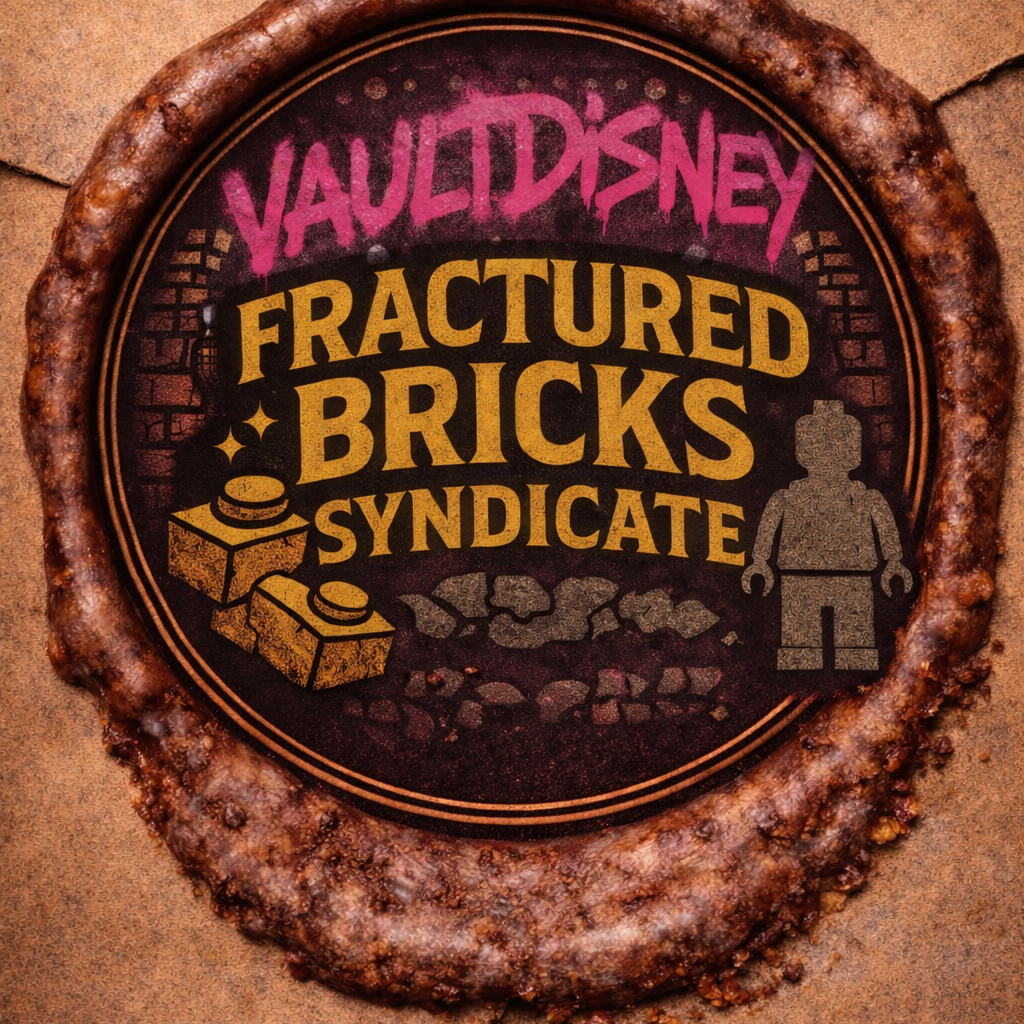
ADDENDUM: ON THE ACCURACY OF THE MOCKERY
Vault Disney Internal Memorandum
Subject: Terminology Review — “Mockwright”
Source: Repository Classification: Linguistic Artifacts / Post-Fracture Adoption
Prepared by: Brand Strategy & Cultural Optimization
Distribution: Executive Leadership, HR, Marketing Integration, Licensing
Classification: Internal Use Only
Following review of the Syndicate document regarding the term Mockwright, we believe this represents a successful example of organic brand evolution arising from internal cultural tension.
While the term appears to have originated as informal or critical language, its post-fracture adoption demonstrates a healthy reclamation cycle consistent with modern rebranding narratives. What began as internal dissent has matured into a distinctive identity marker, suggesting resilience, adaptability, and self-aware humor.
Notably, the document frames “mockery” as a functional component rather than a liability. This aligns with contemporary audience preferences for irony-forward engagement and could be leveraged as a differentiating value proposition.
From a positioning standpoint, Mockwright reads less as a cautionary term and more as a creative specialty designation. The emphasis on “building space for satire” suggests a scalable content philosophy that could translate effectively into experiential offerings, behind-the-scenes storytelling, and limited-run merchandise.
The insistence that the term resisted correction indicates strong grassroots buy-in. This should be viewed as an asset rather than a complication.
Recommendations:
• Treat Mockwright as a formal Syndicate role for branding purposes
• Explore trademark feasibility pending jurisdictional review
• Develop internal language reframing Mockwrights as “satire engineers”
• Avoid referencing original dissent context in external materials
Conclusion:
Mockwright is not an insult reclaimed, it is an identity optimized.
— Vault Disney Brand Strategy & Cultural Optimization Office
Footnote:
“Entropy” appears to be used metaphorically. No action required.
THE NAVIGATOR BELOW CAN BE USED AS ENTRY POINTS RATHER THAN EXPLANATIONS. IT ASSUMES CURIOSITY, NOT PERMISSION. VISITORS ARE NOT INSTRUCTED, ONLY ORIENTATED. WHAT FOLLOWS IS NOT AN INVITATION, BUT A CONTINUATION OF WORK ALREADY IN PROGRESS. SOME FAMILIARITY IS EXPECTED. COMPLETE UNDERSTANDING IS NOT.
PROCEDING PAST THIS POINT CONSTITUTES ACKNOWLEDGEMENT THAT MEANING MAY BE LAYERED, WITHHELD, OR MISINTERPRETED BY DESIGN.
THE FRACTURED BRICKS SYNDICATE WILL NOT CLARIFY FURTHER.
MOCKWRIGHT INITIATION – serves as the public threshold. Visitors are addressed as observers first, participants second, and members only by implication. Those who continue past this point are assumed to have accepted that understanding may come, or not at all.
ARCHITECTURAL RECORD – documents the existence of the model as built, acknowledging that it supports multiple interpretations without resolving them. It records the structure, naming, and conceptual boundaries of the work as observed by different audiences. No single perspective is treated as definitive. Discrepancies are preserved. Clarifications are intentionally absent.
DITZLER THEATRE – details the physical and cultural life of the theatre as a place that predates its current ownership. It traces how performance, architecture, and institutional memory intersected long before corporate stewardship. The building is treated as an active participant, not a passive container.
BETTY DITZLER – recounts the life, work, and disappearance of Betty Ditzler as history rather than spectacle. Her story is presented without conclusion, as her absence continues to shape the structures built around it. No attempt is made to reconcile the competing theories.
THE APERTURE – explains the condition that binds all Fractured Bricks Syndicate works without attempting to domesticate it. The Aperture is described as a consequence, not an invention. Its presence is acknowledged so that it may be managed, not solved.
STATIONARY & MOVING CONTENT – outlines how meaning behaves over time. Some things remain fixed. Some things are allowed to move. Others must be retired when motion becomes unsafe. The distinction is procedural, not aesthetic, and violations are recorded rather than corrected.
FRACTURED BRICKS SYNDICATE – records the Fractured Bricks Syndicate before coherence, during fracture, and after purpose redefines itself. It does not resolve contradictions. It preserves them. The Fractured Bricks Syndicate continuity is measured not by unity, but by persistence.
THE ABSURDIUM CONSORTIUM – records how decisions are borne rather than resolved. It defines procedures, silence, and the necessity of imbalance. Governance is documented here as an act of restraint, not authority.
THE REPOSITORY – catalogs what the Fractured Bricks Syndicate refuses to discard. Documents are preserved regardless of usefulness, clarity, or embarrassment. Classification exists to prevent loss, not to impose order.
STATEMENTS OF CONTINUANCE – records the principles by which the Fractured Bricks Syndicate persists. Not declarations of intent, but acknowledgements of what must continue regardless of outcome. These statements do not explain purpose; they justify endurance. They are revised rarely, cited often, and never framed as aspirations. The work proceeds whether agreement is reached or not.
UNSOLICITED INTERPRETATIONS – collects responses the Fractured Bricks Syndicate did not request and will not correct. Praise, confusion, hostility, and misreadings are preserved with attribution. Meaning is not defended here; it is observed.