
ARCHITECTURAL RECORD
Muppet Theatre Presented by Vault Disney
Lead Architect - The Grimm Plastic Mason
Documents of the existence of the model as built, acknowledging that it supports multiple interpretations without resolving them. It records the structure, naming, and conceptual boundaries of the work as observed by different audiences. Not single perspective is treated as definitive. Discrepancies area preserved. Clarifications area intentionally absent.
SUMMARIZED CONCEPT
The Muppet Theatre Presented By Vault Disney
This model depicts the Ditzler Theatre, a fictional vaudeville house from the 1920s that has been rebranded, renovated, and repurposed most recently by a modern corporate owner known as Vault Disney.
At first glance, the theatre appears glamorous and lovingly preserved. Closer inspection reveals a building under pressure, historic artistry coexisting uneasily with corporate systems designed to monetize, archive, and control creative legacy.
The model explores themes of entertainment history, intellectual property, and institutional bureaucracy through dark satire and architectural storytelling. Every space is intentional, balancing humor with critique. What once existed to showcase performance now functions as a machine that processes it.
The result is a theatre that still puts on a show, but for very different reasons than it once did.
MODEL FRAMEWORK
THE MUPPET THEATRE PRESENTED BY VAULT DISNEY
The Muppet Theatre Presented by Vault Disney is a large-scale plastic world build centered on the fictional Ditzler Theatre, a once-prestigious vaudeville venue whose identity has been reshaped through successive eras of use, occupation, and ownership.
Originally founded in the early twentieth century as a home for live performance and artistic experimentation, the Ditzler Theatre represents an era in which entertainment spaces were designed around craft, spectacle, and human-scale storytelling. That legacy remains visible in fragments of architecture, decor, and institutional memory throughout the model.
After decades of decline following the disappearance of its founder and star, the theatre did not return to prominence through restoration or reinvention, but through reuse. The Muppets became resident performers in the Ditzler Theatre, occupying the space as it was rather than transforming it into something new. Their tenure revived the building’s function without repairing its form. Improvisation, visible seams, backstage chaos, and intentional disorder became the operating logic of the space. For a time, the theatre worked again, not because it was preserved, but because it was actively used.
In its current incarnation, however, the theatre has been overtaken by Vault Disney, a satirical stand-in for modern entertainment conglomerates that treat creative history as a managed asset. Vault Disney acquired the Muppets and, with them, control of the theatre itself. The building now operates as both a performance venue and a processing facility, where intellectual property is curated, repackaged, retired, and quietly monetized.
The model is intentionally layered to reflect this progression. Public-facing spaces emphasize polish, nostalgia, and brand-friendly presentation, while internal areas expose the mechanisms of control, enforcement, resale, morally questionable business practices, and archival containment that sustain the operation. Bureaucracy functions as a narrative force within the build, shaping how spaces are organized and how characters are deployed.
Comedy in the model is deliberate and restrained in terms of gag placement. Humor emerges from juxtaposition, institutional logic taken too far, and the visible strain between art and ownership. Characters are placed with purpose rather than decoration, each scene designed to communicate intent even when specific references go unnoticed.
Ultimately, the model is not about the Muppets alone, nor is it a celebration of corporate nostalgia. It is a satire of how creative legacy passes from creation, to occupation, to extraction. The theatre still stands. The show still goes on. But the reasons for both, and who they serve, have changed.
KEY TAKEAWAYS FOR VIEWERS
This place used to be beautiful and intentional.
Something powerful bought it, repurposed it, and turned it into a machine.
This is a theatre with real history that has been commercialized.
The Muppets’ chaos belongs here, but it is being exploited as part of a bigger machine.
The building is a parody of entertainment ownership: the “vault” is not protection, it is control.
The comedy is intentional and architectural: every room is a thesis statement.
The model rewards close inspection, but it does not require insider knowledge to appreciate the story.
The comedy lives in the tension between these truths.
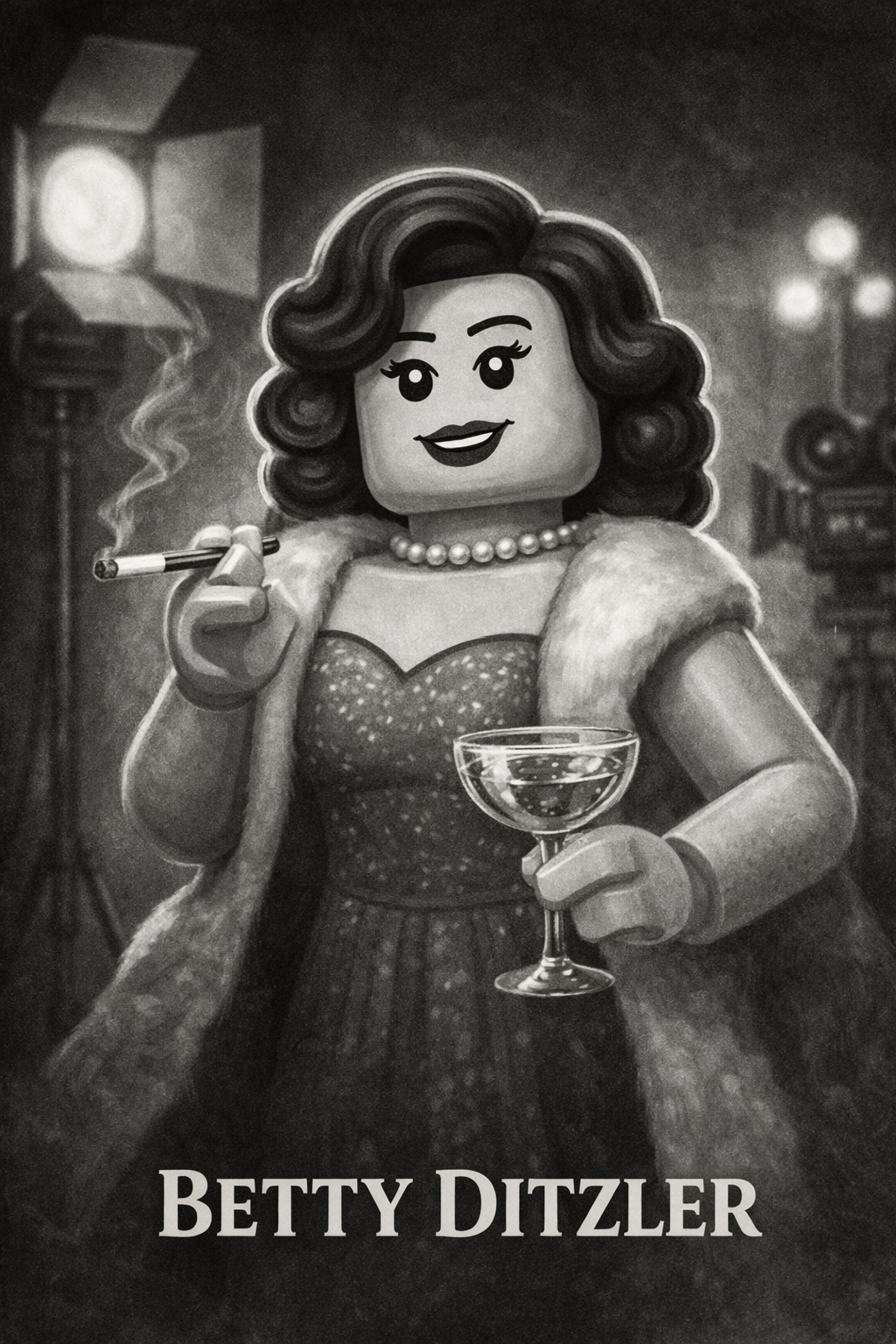
BETTY DITZLER IS THE MYTH BENEATH IT ALL.
Betty Ditzler is the fictional founder and original star of the theatre: a 1920s vaudeville singer with sharp wit and star power. Her disappearance during a live performance in 1931 turned her into a legend. Within the model, her presence functions like a haunting—less horror, more institutional unease. She is the emblem of the theatre’s lost artistic soul and the uncomfortable truth that the building remembers what it used to be.
Importantly: her story is treated as history inside the world, not as a punchline most of the time.
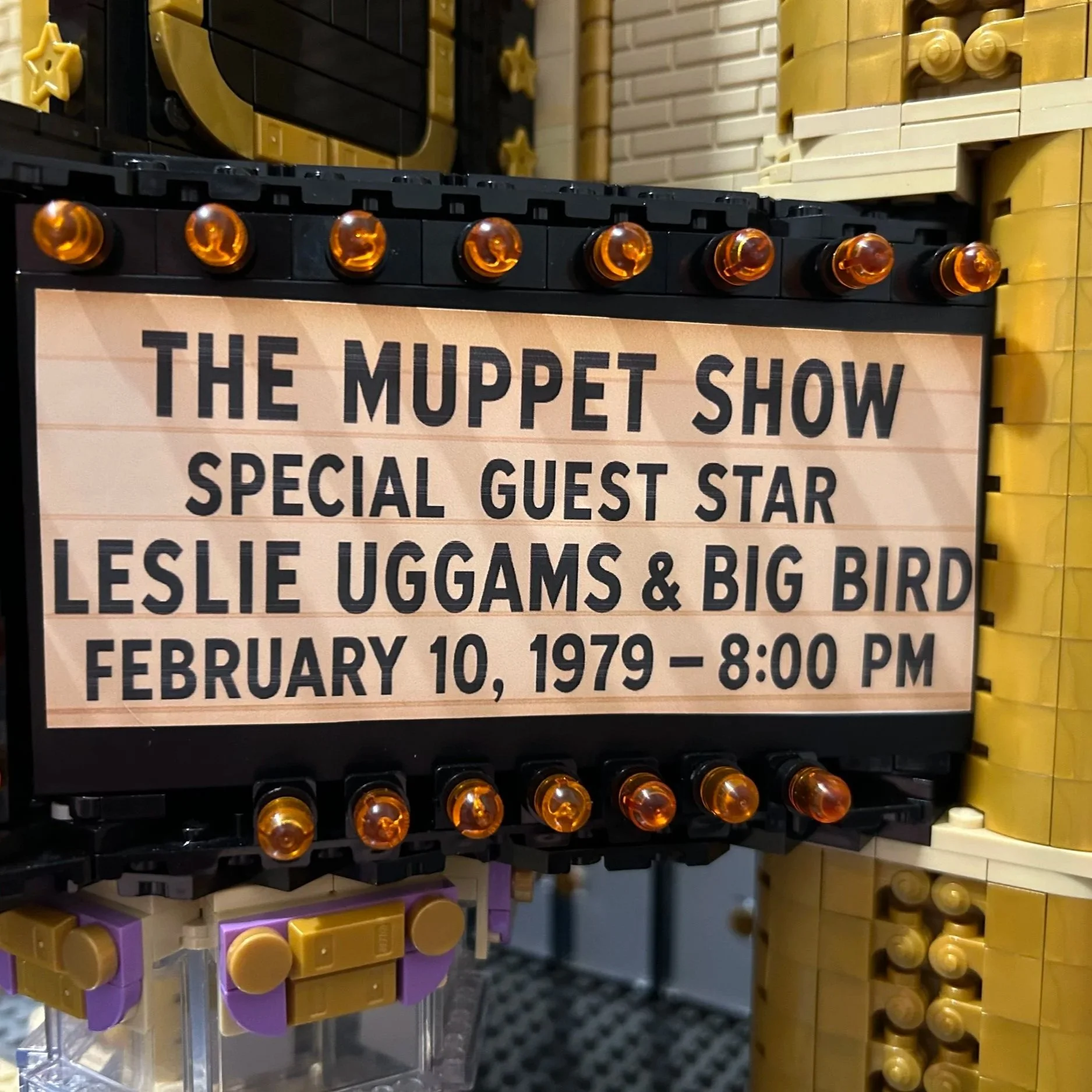
THE CORE STORY THE BUILD TELLS
The Ditzler Theatre is the “before.” The Muppets are the “between.” Vault Disney is the “after.”
The theatre’s identity is intentionally fractured across eras. “Ditzler” represents the original age of the building: performance, craft, glamour, and human-scale storytelling. It was built for live acts, imperfect shows, and audiences close enough to feel the risk.
After Betty Ditzler’s disappearance and the theatre’s long dormancy, the building found new life not through restoration, but through occupation. The Muppets entered the Ditzler as resident performers, adapting the space rather than replacing it. They revived the theatre’s function without restoring its form, embracing chaos, improvisation, and visible seams. For a time, the theatre worked again, not because it was polished, but because it was used.
“Vault Disney” represents the current era: branding, control, synergy, and profit extraction. Vault Disney arrived later, acquiring the Muppets and inheriting the theatre’s lease. The building was not replaced, but overlaid, its history preserved as surface texture while new systems of monetization, enforcement, and archival control were installed beneath and around it.
You will see this layered occupation everywhere: old-world elegance pressed against Muppet-era improvisation; creative chaos interrupted by glossy corporate intrusions; classic theatre logic colliding with modern, often absurd “business” logic; genuine history reused as set dressing.
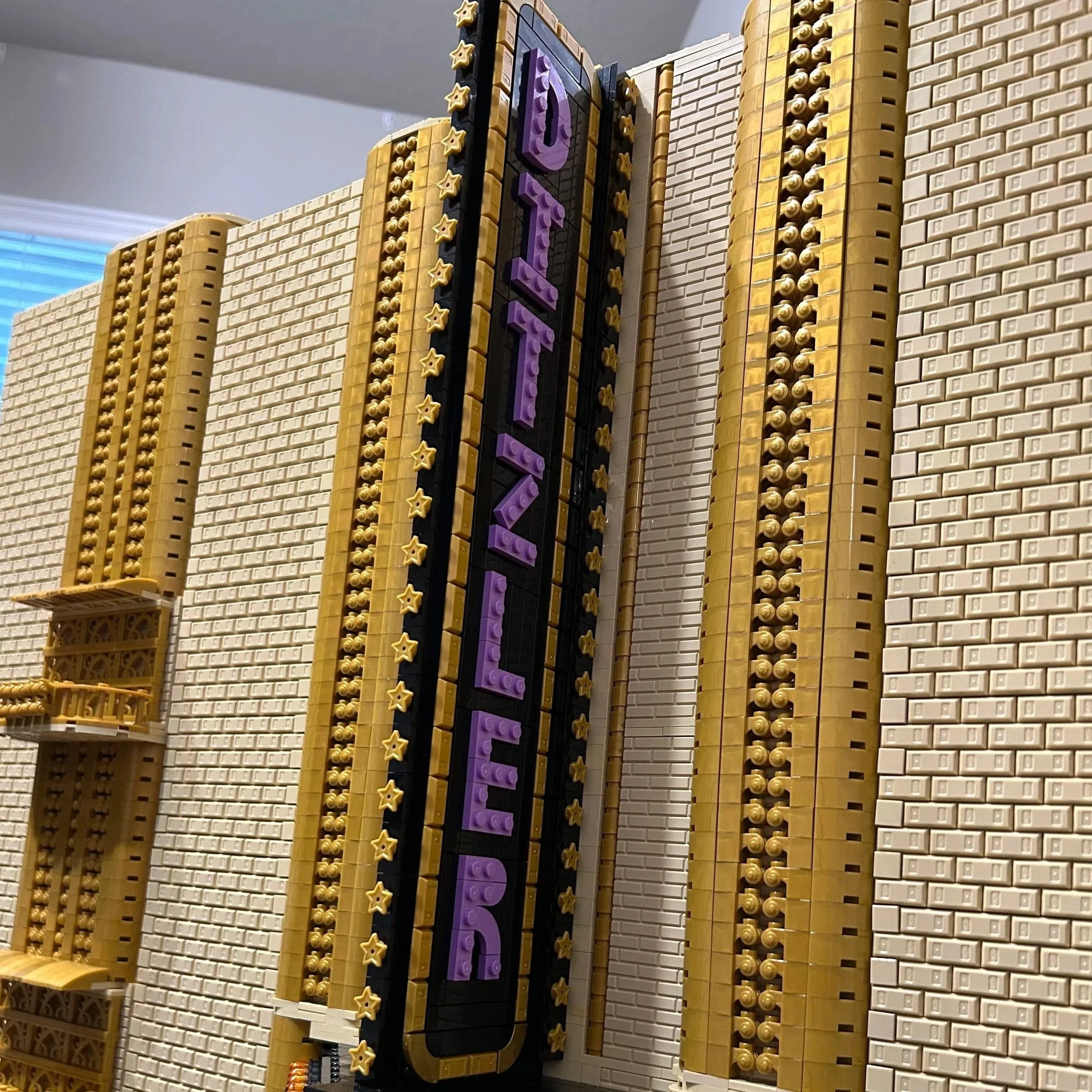
THE MAJOR THEMES FOR THE MUPPET THEATRE PRESENT BY VAULT DISNEY
1) Creative history vs corporate repackaging
The model is a satire of how entertainment companies preserve “legacy” as a brand asset while stripping it of meaning. The building looks like it has been preserved and improved, but the closer you look, the more you realize it is being used. The result is intentionally unsettling: the theatre is both a shrine and a storefront.
2) Bureaucracy as a character
The organization running this place behaves like a bureaucratic machine. Things are categorized, processed, archived, and repurposed. “Official” language, departments, enforcement, and procedures show up in the model as physical spaces and visual storytelling devices. This is not just background flavor, the bureaucracy is part of the joke and part of the menace.
3) The ethics of “the vault”
“Vault Disney” is portrayed as an entity that collects, controls, and retires intellectual property the way a mob boss collects assets. This is not simply “Disney nostalgia.” It is about ownership, access, and who benefits when art becomes inventory. Some areas are deliberately opulent to emphasize the hypocrisy: glittering surfaces hiding ugly intent.
4) Intentionality over randomness
This build does not place characters “because they look cool.” Every placement is meant to mean something, an actor connection, a canonical reversal, a visual pun, an institutional parody, a reference to a real-world entertainment habit. The model is structured so that even when a viewer does not catch the specific reference, the scene still reads as purposeful.
5) Dark comedy with restraint
The humor is mean-spirited in the way the best satire is: it punches at systems, exploitation, and corporate rot. It does not rely on loud jokes. Many gags are designed to look plausible at first glance, then reveal their uglier or funnier layer as you keep looking.
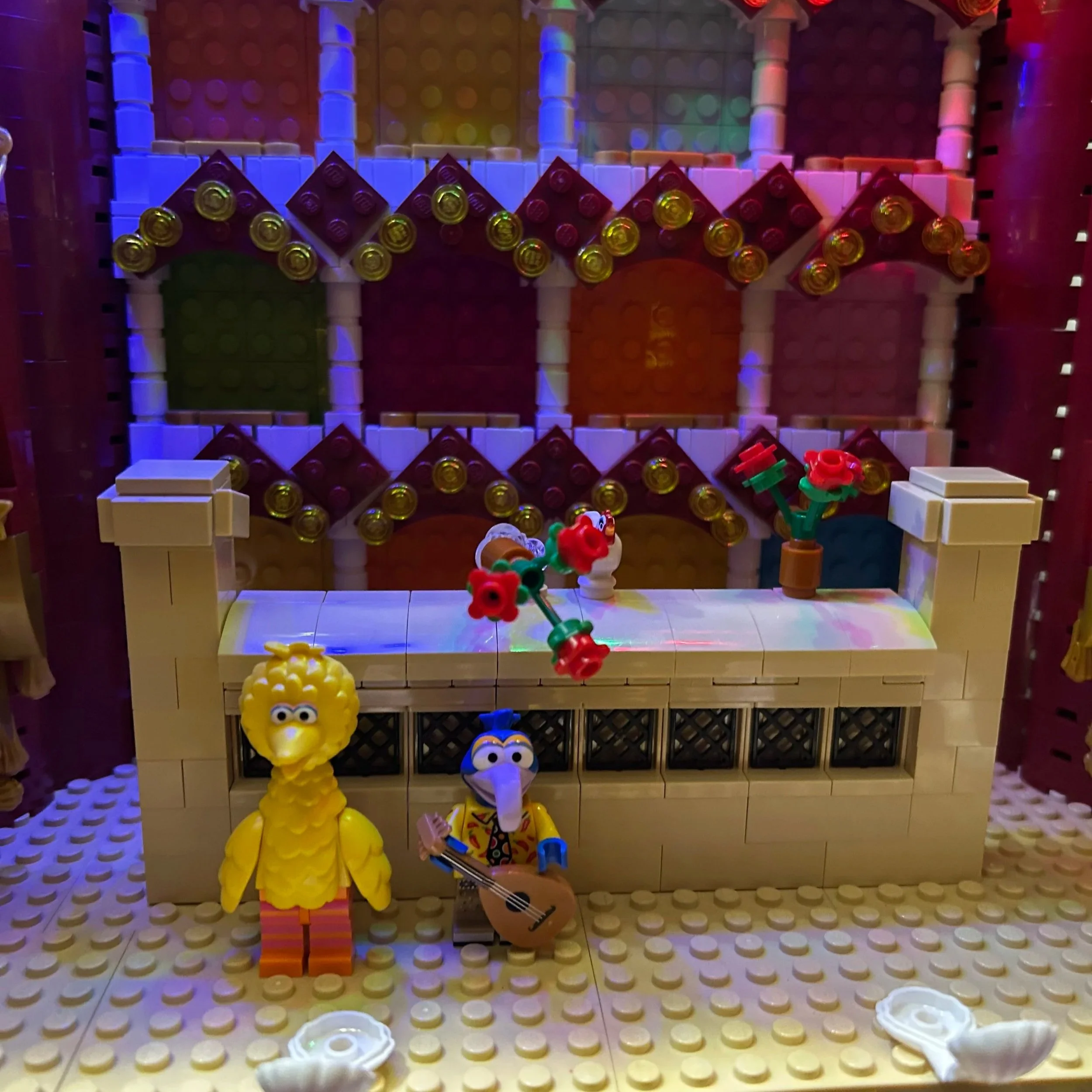
HOW THE SPACE IS ORGANIZED
Front-of-house reads as glamour. Back-of-house reads as corporate truth. The exterior and lobby aim for vaudeville charm and “park-ready” presentation. Behind that, the model shifts into the machinery: backstage chaos, corporate spaces, enforcement, illegal operations, holding areas, resale operations, and institutional “departments” that feel more like a government office than a theatre.
The theatre is not a single mood. It is a layered building with competing agendas.
Performance is the veneer. Operations are the reality.
The show exists. Guests exist. The theatre is “running.” But the real story is everything around it: what is being processed, who is controlling what, what is being sold, what is being hidden, and what has been quietly discarded.
RESTRICTED ADDENDUM
Access Level: Mockwright
Circulation: Limited
Filed under: The Aperture Files / Supplemental Context (This document should not appear in public indices.)
Mockwright,
If you are reading this, you already understand that the theatre’s current state is not an accident, nor is it entirely a failure.
The pause mattered.
When construction ceased, briefly, deliberately, and with good intentions, the gags already placed exerted pressure without release. Structure held. Meaning did not. The resulting distortion was not malicious, but it was inevitable. We did not create the Aperture. We made space for it.
Betty Ditzler was present when the fault opened. Her absence is recorded publicly as disappearance. Internally, it is understood as incorporation. She did not leave the theatre. The theatre learned her shape.
Vault Disney did not cause this. They discovered it. Their involvement should be understood as opportunistic rather than inventive. They are effective administrators of consequences they did not earn.
The theatre persists because it must. Performance continues because it absorbs strain. The Muppets are tolerated because chaos, when controlled, functions as ballast.
This is not restoration work.
It is load management.
You are not tasked with correcting the theatre. You are tasked with ensuring that what remains has somewhere to land. Future builds may exceed the original footprint. This is acceptable. It is preferable.
What must not happen again is absence without intention.
Remember:
Pauses create pressure.
Pressure seeks release.
Release without structure tears.
Set the brick. Let the absurd land.
—Filed and sealed by the Grimm Plastic Mason
—Witnessed by the Absurdium Consortium
ON THE MATTER OF THE DITZLER THEATRE (OFFICIAL HISTORY PER THE FRACTURED BRICKS SYNDICATE)
Filed for Context. Not for Comfort.
The structure presently known as The Muppet Theatre Presented by Vault Disney was, and remains, the Ditzler Theatre.
Designed and built by the Master Brickwright of the Fractured Bricks Syndicate, The Grimm Plastic Mason. Constructed in the early twentieth century, the Ditzler Theatre was originally commissioned as a vaudeville house, designed for live performance, spectacle, and the cultivation of emerging talent. Its architecture favored intimacy, precision, and excess in equal measure. This intent is still visible, though increasingly obscured.
Following a series of ownership transitions and internal disruptions, the theatre came under the operational control of an external corporate entity operating under the name Vault Disney. While the building remains active, its function has been materially altered. Performance continues, but now exists alongside systems of classification, branding, enforcement, and asset management that were not part of the theatre’s original purpose.
The Syndicate notes that the theatre now operates in two modes simultaneously:
As a public-facing venue emphasizing nostalgia, polish, and continuity.
As an internal mechanism for containment, repurposing, and long-term exploitation of creative material.
This duality is structural, not accidental.
Elements of the original Ditzler identity persist throughout the building in fragmentary form. These remnants should not be mistaken for preservation. They function instead as load-bearing nostalgia, supporting newer systems layered on top of them.
The presence of the Muppets within the theatre is consistent with its original ethos of controlled chaos. Their continued operation is tolerated, and in some cases encouraged, by Vault Disney, provided their output remains commercially legible.
The Syndicate does not classify this as restoration.
It is recontextualization.
Visitors encountering the theatre are advised that coherence is not guaranteed. Apparent contradictions, tonal shifts, and institutional absurdities should be understood as operational realities rather than narrative flaws.
The building remembers what it was.
The systems insist on what it is now.
The tension between the two is ongoing.
This record remains open.
THE NAVIGATOR BELOW CAN BE USED AS ENTRY POINTS RATHER THAN EXPLANATIONS. IT ASSUMES CURIOSITY, NOT PERMISSION. VISITORS ARE NOT INSTRUCTED, ONLY ORIENTATED. WHAT FOLLOWS IS NOT AN INVITATION, BUT A CONTINUATION OF WORK ALREADY IN PROGRESS. SOME FAMILIARITY IS EXPECTED. COMPLETE UNDERSTANDING IS NOT.
PROCEDING PAST THIS POINT CONSTITUTES ACKNOWLEDGEMENT THAT MEANING MAY BE LAYERED, WITHHELD, OR MISINTERPRETED BY DESIGN.
THE FRACTURED BRICKS SYNDICATE WILL NOT CLARIFY FURTHER.
MOCKWRIGHT INITIATION – serves as the public threshold. Visitors are addressed as observers first, participants second, and members only by implication. Those who continue past this point are assumed to have accepted that understanding may come, or not at all.
ARCHITECTURAL RECORD – documents the existence of the model as built, acknowledging that it supports multiple interpretations without resolving them. It records the structure, naming, and conceptual boundaries of the work as observed by different audiences. No single perspective is treated as definitive. Discrepancies are preserved. Clarifications are intentionally absent.
DITZLER THEATRE – details the physical and cultural life of the theatre as a place that predates its current ownership. It traces how performance, architecture, and institutional memory intersected long before corporate stewardship. The building is treated as an active participant, not a passive container.
BETTY DITZLER – recounts the life, work, and disappearance of Betty Ditzler as history rather than spectacle. Her story is presented without conclusion, as her absence continues to shape the structures built around it. No attempt is made to reconcile the competing theories.
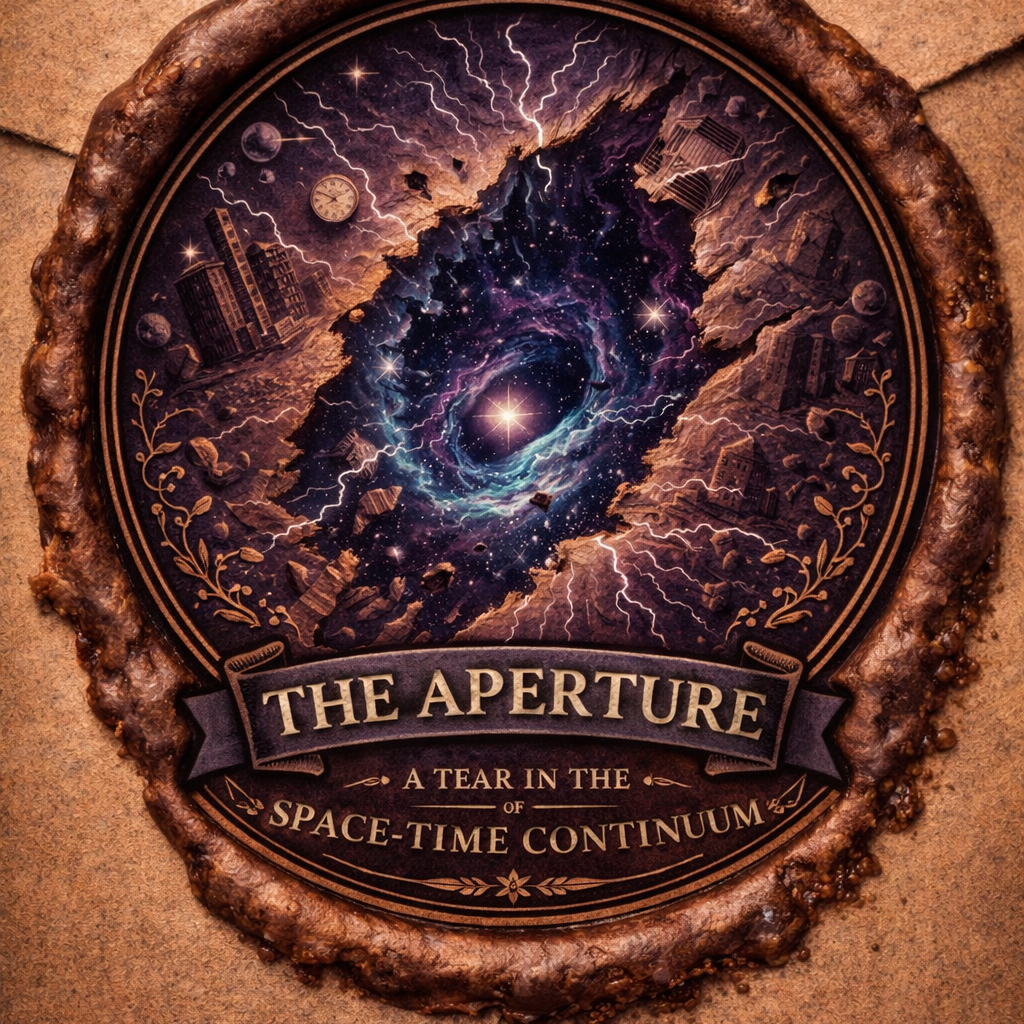
THE APERTURE – explains the condition that binds all Fractured Bricks Syndicate works without attempting to domesticate it. The Aperture is described as a consequence, not an invention. Its presence is acknowledged so that it may be managed, not solved.
STATIONARY & MOVING CONTENT – outlines how meaning behaves over time. Some things remain fixed. Some things are allowed to move. Others must be retired when motion becomes unsafe. The distinction is procedural, not aesthetic, and violations are recorded rather than corrected.
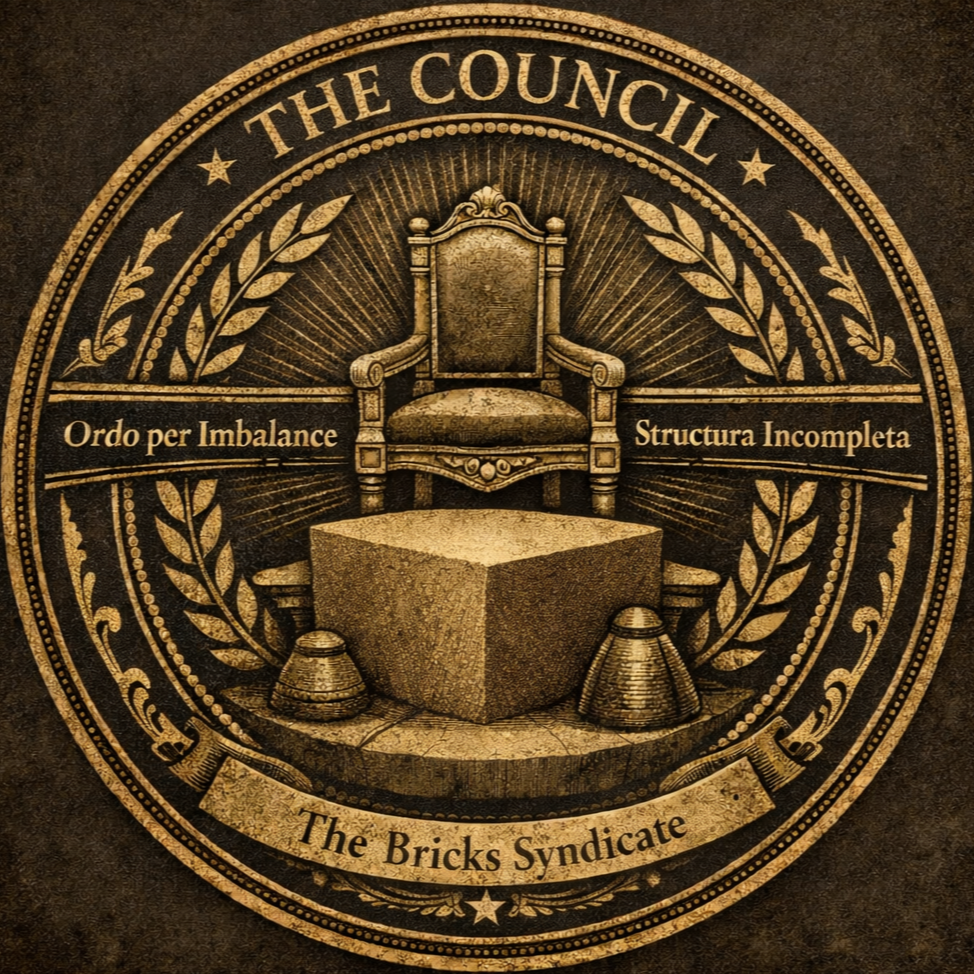
FRACTURED BRICKS SYNDICATE – records the Fractured Bricks Syndicate before coherence, during fracture, and after purpose redefines itself. It does not resolve contradictions. It preserves them. The Fractured Bricks Syndicate continuity is measured not by unity, but by persistence.
THE ABSURDIUM CONSORTIUM – records how decisions are borne rather than resolved. It defines procedures, silence, and the necessity of imbalance. Governance is documented here as an act of restraint, not authority.
THE REPOSITORY – catalogs what the Fractured Bricks Syndicate refuses to discard. Documents are preserved regardless of usefulness, clarity, or embarrassment. Classification exists to prevent loss, not to impose order.
STATEMENTS OF CONTINUANCE – records the principles by which the Fractured Bricks Syndicate persists. Not declarations of intent, but acknowledgements of what must continue regardless of outcome. These statements do not explain purpose; they justify endurance. They are revised rarely, cited often, and never framed as aspirations. The work proceeds whether agreement is reached or not.
UNSOLICITED INTERPRETATIONS – collects responses the Fractured Bricks Syndicate did not request and will not correct. Praise, confusion, hostility, and misreadings are preserved with attribution. Meaning is not defended here; it is observed.