
Muppet Theatre Presented by Vault Disney
Lead Architect - The Grimm Plastic Mason
Details of the physical and cultural life of the theatre as a place that predates its current ownership. It traces how performance, architecture, and institutional memory intersected long before corporate stewardship. The building is treated as an active participant, not a passive container.
How to View the Ditzler Theatre (Summarized Version)
A Note on Different Perspectives
The Ditzler Theatre exists in four concurrent narratives.
Each is true to those who hold it.
None fully explain the whole.
The Public Record
(What the world believes)
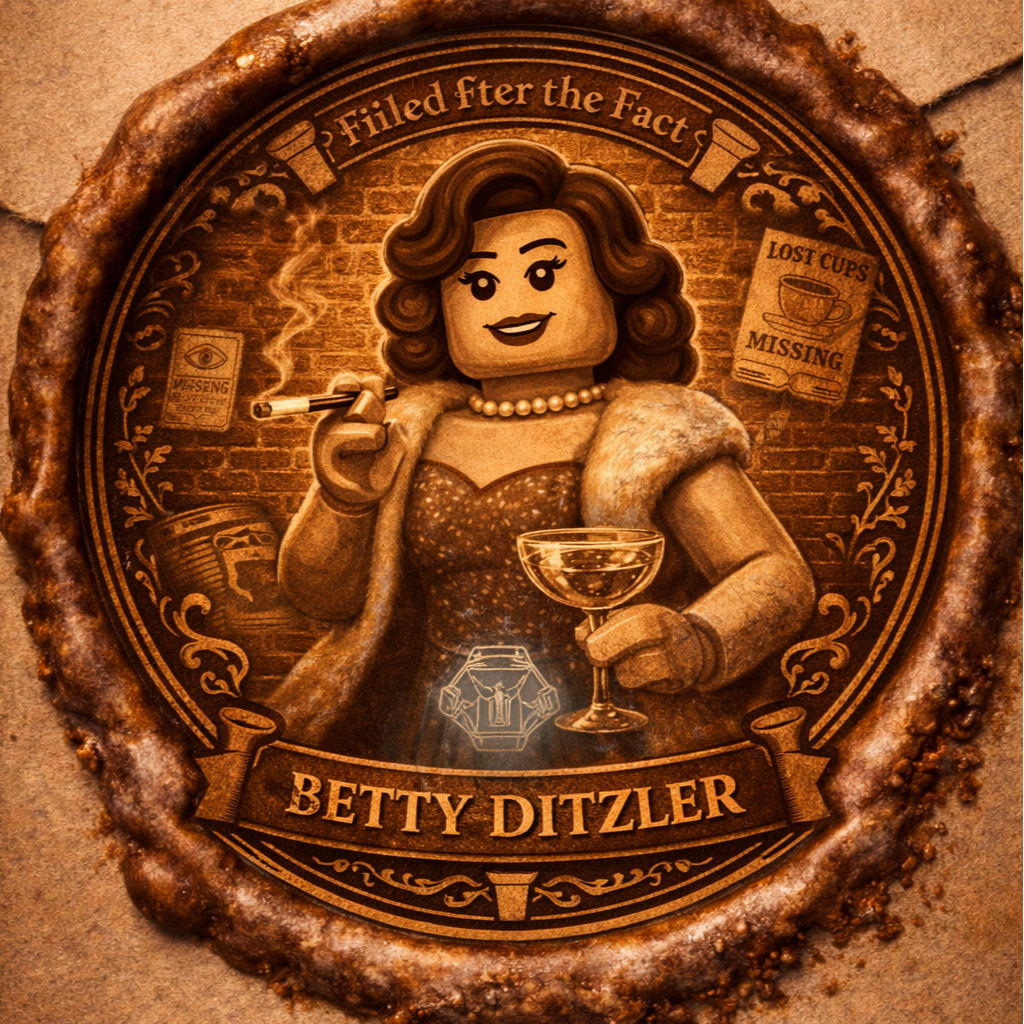
To the public, the Ditzler Theatre is a historic performance venue with a complicated past.
Founded in the early twentieth century, it is best known for the mysterious disappearance of vaudeville star Betty Ditzler during a live performance in 1931. Over the decades, rumors followed: that she fled, that she was murdered, that the theatre itself is haunted. None have ever been proven.
Years later, the theatre was revived by the Muppets, who restored it as a working venue. Today, it operates under corporate ownership, presenting entertainment while quietly trading on nostalgia, legend, and reputation for increased profit margins.
To most visitors, it is simply an old theatre that never quite escaped its complicated past.

2. The Muppet Tenancy
(What actually worked)
For a time, the theatre belonged to the Muppets.
They did not resolve the legends or modernize the building. They adapted to it. The structure bent. The jokes landed. The theatre functioned as a living performance space again, chaotic but coherent.
This period is remembered fondly by audiences and dismissed by management as “operationally inefficient.”
The Muppets did not own the building.
They understood it.
3. The Vault Disney Account
(What the executives know)
Vault Disney acquired the Muppets, and with them, the lease on the Ditzler Theatre, without expecting much return.
The building was costly. The brand value uncertain. Various legally questionable side ventures were attempted to justify the overhead.
Then the Aperture was discovered.
What appeared to be an architectural anomaly became a financial instrument: a uncontained space beyond public scrutiny where intellectual property could be retired, repurposed, monetized, or quietly disposed of. Assets that no longer fit the brand could still generate value—leased, exchanged, or reintroduced when convenient.
To Vault Disney, the theatre is no longer a venue.
It is infrastructure.

4. The Syndicate Record
(What actually happened)
The theatre was never meant to become this.
Designed by the Grimm Plastic Mason as a place where satire could naturally accumulate, the Ditzler Theatre grew beyond its intended scale. Jokes outpaced space. Gags stacked faster than they could be housed.
A pause was taken.
A consideration of scale.
A moment of restraint.
That was enough.
The jokes had nowhere to land, and reality tore.
The Aperture was not engineered. It was caused.
Betty Ditzler was not responsible. She was there and then she wasn’t.
Since then, the Fractured Brick Syndicate builds not for expansion, but for containment, constructing spaces so absurdity can safely resolve without tearing the world further apart.
Vault Disney exploits the Aperture. The Syndicate tolerates this, because unused satire is more dangerous than corruption.

A Final Note
You may notice that these accounts do not align.
That is intentional.
The theatre still stands.
The shows continue.
The jokes land—most of the time.
And if something feels slightly off, that is because you are standing near a place where too many truths occupy the same plastic brickwork.
THE DITZLER THEATRE (EXPANDED VERSION)
(Public Record)
The Ditzler Theatre is a historic vaudeville house dating back to the early twentieth century. Founded by performer and impresario Betty Ditzler, the theatre was once known for live music, comedy, and theatrical spectacle during the height of the vaudeville era.
In 1931, Betty Ditzler vanished during a live performance. No official explanation was ever recorded. Over time, theories emerged ranging from scandal and reinvention to espionage, murder, or the belief that the theatre itself is haunted. None have ever been confirmed.
After decades of dormancy, the theatre returned to active use as the home of The Muppets, who established it as a working venue once again. Their long residency reshaped the building through use rather than renovation, leaving visible layers of adaptation throughout the space.
Today, the theatre operates as The Muppet Theatre Presented by Vault Disney. Vault Disney manages all aspects of the building, both public-facing and internal. Performers, staff, and operational spaces are drawn almost entirely from Vault Disney’s extensive portfolio of characters and properties.
Visitors may notice that familiar figures appear not only onstage, but throughout the theatre’s infrastructure, in offices, storage areas, and behind-the-scenes spaces not traditionally visible to audiences. This reflects Vault Disney’s integrated approach to management, where performance, operations, and brand stewardship are treated as a single system.
Architectural inconsistencies, unusual room functions, and the presence of retired or rarely seen characters are part of the theatre’s ongoing evolution. Some areas appear carefully maintained, while others seem paused in time.
Whether viewed as a restored landmark, a living workplace, or something stranger, the Ditzler Theatre remains active, a space where entertainment continues to be produced, managed, and preserved under one roof.

THE MUPPET S (EXPANDED)
On Occupying the Ditzler Theatre
(As Remembered, Not Recorded)
We moved in because it worked.
The stage was solid, the sightlines were good, the price was right, and nobody asked too many questions about noise, smoke, chickens, or why the orchestra pit kept changing shape. That already put it ahead of most places we had tried.
People talked about Betty Ditzler. Mostly they said the theatre was haunted. We did not worry about that. Every theatre is haunted. Some just admit it.
The building was strange, sure. Hallways felt longer on some days. Doors opened onto rooms we did not remember building. Occasionally a joke would land harder than expected, like the room itself had helped it along. That is normal theatre behavior.
We put on shows.
That fixed a lot of things.
When the stage was active, the building behaved. When the audience laughed, the walls stayed where they were supposed to. When the orchestra played, the lights came back on even if someone forgot to wire them correctly. The theatre liked being used.
We did not try to explain it.
Ownership changed. It always does. We were told we were now “presented by” someone. Fine. As long as the curtains opened on time and the checks cleared, we could work with that.
Sometimes new rooms appeared backstage with signs on them we were advised not to read. Sometimes characters we did not recognize wandered through rehearsal looking lost. We gave them coffee and pointed them toward the exit. That seemed to help.
The important thing was to keep the show going.
If you stop, the building gets ideas.
So we did not stop.
That is really the whole story.
***DOCUMENTS BEYOND THIS POINT ARE CONSIDERED CONFIDENTIAL***
(MUST HAVE NECESSARY CLEARANCE TO REVIEW)
Vault Disney (Executive Reference )
Executive Reference — Restricted Circulation
Historical Context: Acquisition Phase & Early Loss Mitigation
At the time of acquisition, the Muppets were viewed internally as a legacy property with declining strategic clarity but durable brand recognition. The associated lease on the Ditzler Theatre was inherited as part of the transaction and initially assessed as non-essential.
Early evaluations flagged the theatre as a persistent cost overage. Its age, irregular architecture, and limited scalability made traditional redevelopment financially unattractive. Full divestment was considered but deferred due to public sentiment and the residual value of the Muppet brand.
During this period, Vault Disney explored multiple strategies to offset operational losses associated with the property. These included limited-run experiences, experimental licensing arrangements, and ancillary revenue programs positioned under the umbrella of “heritage activation.” Several initiatives operated at the margins of regulatory comfort but failed to produce meaningful returns.
By all projections, the Ditzler Theatre was expected to remain a controlled liability.
This assessment changed following the identification of an architectural anomaly within the structure.
Initial observations suggested the anomaly functioned as a spatial irregularity with unusual containment properties. Further internal review determined that activities conducted within its boundaries were functionally insulated from standard oversight mechanisms, including public visibility, external auditing, and conventional jurisdictional review.
At that point, the theatre’s status shifted.
What had been a financial burden became an opportunity. The anomaly allowed Vault Disney to relocate its most sensitive and least brand-aligned operations into a space that was simultaneously inaccessible, deniable, and self-contained. Activities previously constrained by legal, tax, or reputational exposure could now be conducted with significantly reduced risk.
The Ditzler Theatre was reclassified internally from “legacy liability” to strategic containment asset.
Subsequent discovery that the anomaly could also house intellectual property in altered, deferred, or unstable states further expanded its utility. From that moment forward, the theatre ceased to function merely as a venue.
It became infrastructure.
Vault Disney (Executive Reference)
Executive Reference — Restricted Circulation
Asset: Ditzler Theatre / Muppet Theatre Property
(For Board and Senior Strategy Review Only)
The Ditzler Theatre remains a high-yield asset due to its unusual spatial flexibility, legacy branding value, and its capacity to absorb non-performing intellectual property without public scrutiny.
Following acquisition of the Muppets and inheritance of the theatre lease, Vault Disney transitioned the property from a single-purpose performance venue into a multi-function operational site. This includes live entertainment, brand reinforcement, asset holding, deferred IP storage, and revenue activities not suited to public-facing properties.
The theatre’s layered history provides natural cover. Public perception accepts architectural inconsistency, eccentric staffing, and unconventional room usage as part of the venue’s “charm.” This has proven advantageous when routing sensitive operations through areas nominally classified as backstage, archival, or inactive.
Certain legacy characters and properties no longer viable in primary markets continue to generate value when reassigned internally. Housing these assets within the Ditzler and the associated spatial irregularity allows Vault Disney to extract residual brand equity while avoiding depreciation, write-offs, or public retirement narratives.
Financial flows within the theatre are intentionally complex. Revenue generated through entertainment, concessions, gaming, and adult-oriented programming is distributed across overlapping internal accounts, subsidiaries, and licensing arrangements. This structure minimizes external visibility while maintaining internal accountability.
The architectural anomaly discovered on-site has significantly expanded these capabilities. While its origin remains undocumented, its function is now understood and incorporated into long-term strategy. The anomaly enables efficient containment, reassignment, and controlled circulation of retired or surplus properties with minimal logistical overhead.
Vault Disney’s ongoing partnership with the Fractured Brick Syndicate remains mutually beneficial. The Syndicate provides structural maintenance, spatial stabilization, and narrative insulation. In exchange, Vault Disney supplies a steady stream of underperforming or retired assets suitable for Syndicate use for mean spirited mockery. Oversight is intentionally light.
Board consensus maintains that the Ditzler Theatre should continue operating in its current hybrid state. Full transparency is neither required nor recommended. The property functions best when its true scope remains diffuse, misunderstood, and dismissed as theatrical excess.
In summary:
The theatre is not merely a venue.
It is a solution.
Syndicate Record (Expanded)
On the Ditzler Theatre, the Pause, and the Aperture
(Restricted — Mockwright Access Only)
The Ditzler Theatre was built for Betty Ditzler.
It was designed by the Grimm Plastic Mason as a working vaudeville house, not an experiment, not a container, not a pressure vessel. It was meant to do exactly what it did: host performance, absorb satire, and adapt in real time as jokes landed and shows evolved. The Mason built in response to need, not speculation. When a gag required space, space was made. When a bit demanded structure, structure followed.
For years, the theatre functioned as intended.
What failed was not the design, but the scale.
Betty’s success accelerated faster than the building could reasonably grow. The volume of satire, spectacle, and layered meaning began to outpace the theatre’s physical limits. The Grimm Plastic Mason responded as always, expanding, reinforcing, improvising, until the moment came when growth itself required reconsideration.
The pause was brief.
It was practical.
It was fatal.
During that pause, jokes continued to exist without placement. Absurdity accumulated without resolution. The theatre, built to adapt continuously, was asked to wait.
That waiting created the conditions for the Aperture.
The Aperture did not tear open violently. There was no deafing explosion, no collapse, the buidling did not crumble. It appeared almost quietly, as a misalignment, a place where the building expected satire and found none. Betty Ditzler was standing where the joke should have landed. A small pop and she was gone.
She vanished without an audience.
To the public, Betty disappeared mid intermission. Theories proliferated immediately and persist to this day: scandal, murder, escape, espionage, haunting. None are correct, and none are entirely wrong. Within the Aperture, Betty did not die. She became dispersed, her presence diffused across the space she helped define. The theatre remembers her because the theatre is, in part, still built around her absence.
The Grimm Plastic Mason was present for the aftermath. The master brickwright recognized the failure immediately.
Construction resumed not to expand, but to contain. Walls were reinforced not for weight, but for implication. Jokes were placed deliberately, sometimes prematurely, to prevent further accumulation. From this moment forward, the Guild understood its role had changed.
We were no longer building to showcase satire. We were building to keep it from tearing through reality again.
The Aperture persisted. It did not close when the theatre reopened. It stabilized.
Years later, the Muppets arrived, not as saviors, but as stewards. They occupied the theatre honestly, using it as intended: performance, chaos, controlled absurdity. Their presence relieved pressure. Gags landed again. The building held.
Then Vault Disney acquired the Muppets.
With them came the lease.
At first, Vault Disney treated the theatre as a curiosity, a legacy asset with marginal value and inconvenient maintenance costs. They experimented with conventional and non-conventional revenue streams. None justified the building’s overhead. The theatre should have been shuttered.
Instead, Vault Disney found the Aperture. They did not understand it. They did not need to.
They recognized a space that existed adjacent to regulation, taxation, and oversight. Retired intellectual property could be stored there without any overhead. Abandoned brands could be recycled. Unsavory ventures could operate beyond visibility. Value could be extracted without attribution.
Vault Disney did what it always does when faced with a phenomenon it cannot control: it branded it, monetized it, and assigned it a department.
The Guild was consulted only after this discovery, not as owners, but as specialists. We were offered access in exchange for cooperation. Retired IP flowed into the Aperture to be used to land gags that had to land. In return, we were permitted to use what others discarded. Our satire gained material. Their balance sheets improved.
This arrangement persists.
We do not endorse it.
We do not stop it.
Our mandate is narrower and more urgent.
We build so that jokes land.
We build so that meaning has somewhere to go.
We build so that the Aperture does not widen.
The Grimm Plastic Mason understood this before the rest of us. The pause taught the lesson we now live by: satire denied placement becomes pressure. Pressure becomes rupture.
Theatre is not optional. Structure is not indulgent. Absurdity must be housed.
That is why we continue.

Syndicate Marginal Note
(Filed as an Observation, Not a Complaint)
During the period of Muppet tenancy, joke impact increased measurably.
Laughter occurred earlier. Timing errors self-corrected. Physical gags resolved without structural strain.
No such improvements have been observed under current management.
— Recorded by order of the Grimm Plastic Mason
(No follow-up recommended.)

Marginal Notes - Syndicate Record

Marginal Notes - Syndicate Record
Beside: “They recognized a space that existed adjacent to regulation…”
Dewey: “Adjacency exploited. Predictably.”
Beside: “Then Vault Disney acquired the Muppets.”
Mockwright (sharp hand): “Here it comes.”

Marginal Notes - Syndicate Record
Beside: “The Ditzler Theatre was built for Betty Ditzler.”
Hand unknown: “Not in her honor. In her measure.”

Marginal Notes - Syndicate Record
Beside: “The Mason built in response to need, not speculation.”
Knox (later hand): “This was not reckless. It only looked like it from behind a desk.”

Marginal Notes - Syndicate Record
Beside: “What failed was not the design, but the scale.”
Dewey: “Filed under: Accurate, Uncomfortable Truths.”

Marginal Notes - Syndicate Record
Beside: “The pause was brief. It was practical. It was fatal.”
Mockwright annotation: “No pause has ever survived being reasonable.”
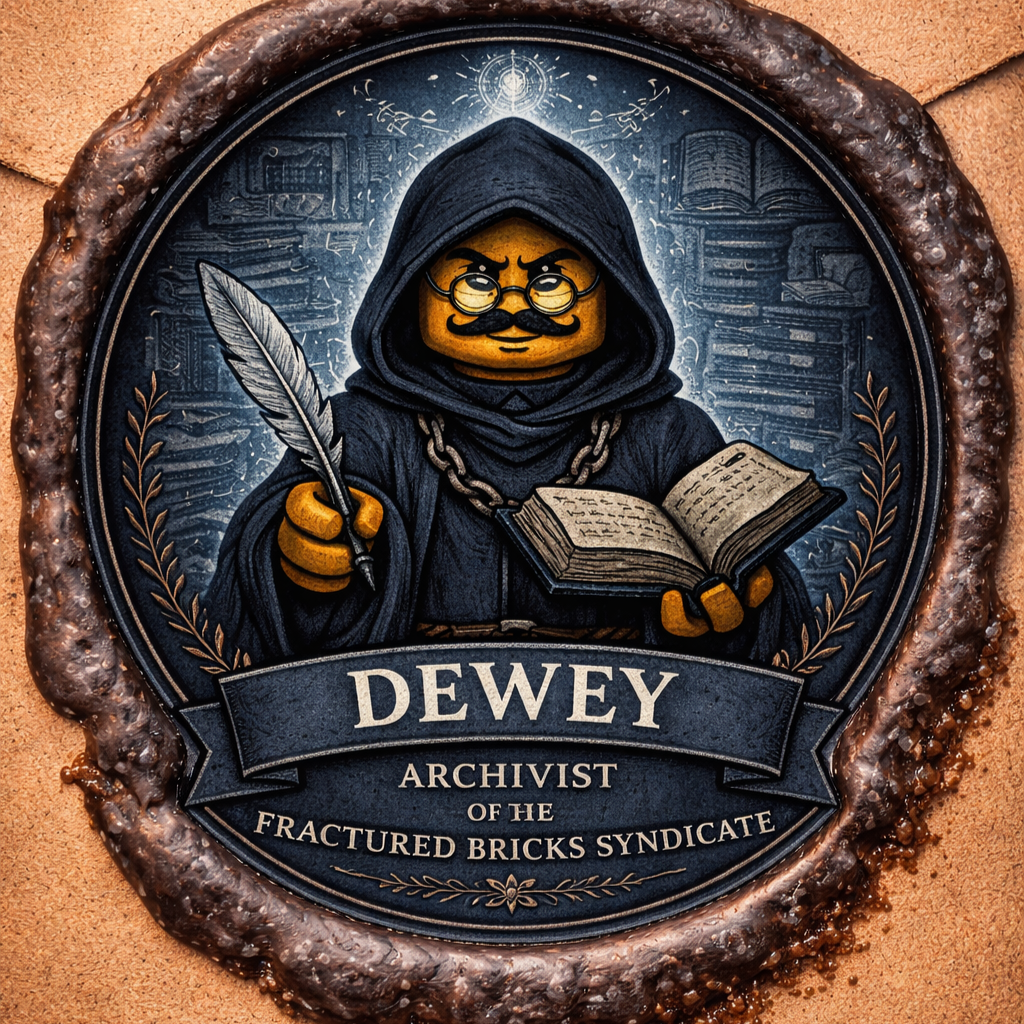
Marginal Notes - Syndicate Record
Beside: “Absurdity accumulated without resolution.”
Dewey: “Accumulation noted. No container specified.”

Marginal Notes - Syndicate Record
Beside: “She vanished without an audience.”
Mockwright: “The worst possible exit.”

Marginal Notes - Syndicate Record
Beside: “The Guild was consulted only after this discovery…”
Knox: “Consulted’ is generous.”
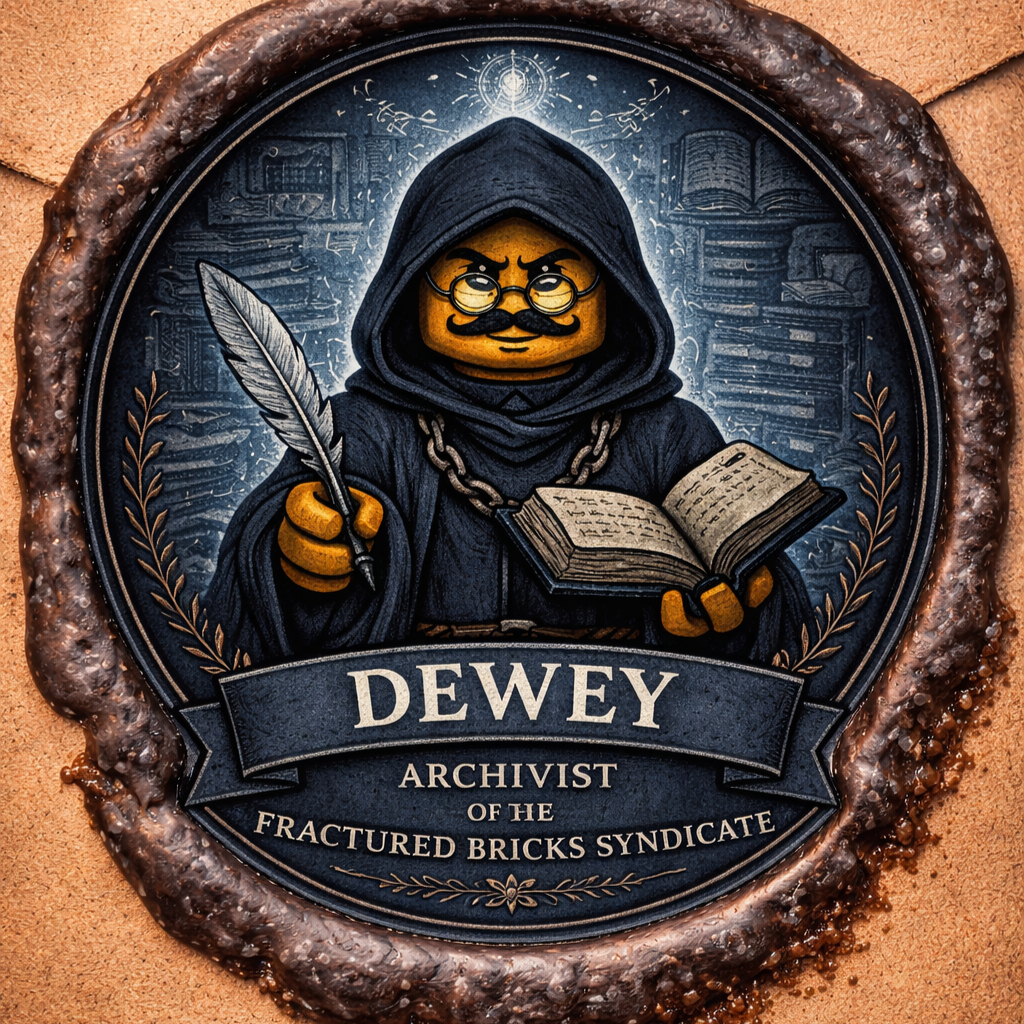
Marginal Notes - Syndicate Record
Beside: “We do not endorse it. We do not stop it.”
Dewey: “Stance recorded. Ineffectiveness acknowledged.”

Marginal Notes - Syndicate Record
Beside: “We build so that jokes land.”
Mockwright: “This used to be a joke.”
Marginal Notes - Syndicate Record
Beside: Final paragraph
Knox (closing hand): “The pause taught us what certainty never could.”
THE NAVIGATOR BELOW CAN BE USED AS ENTRY POINTS RATHER THAN EXPLANATIONS. IT ASSUMES CURIOSITY, NOT PERMISSION. VISITORS ARE NOT INSTRUCTED, ONLY ORIENTATED. WHAT FOLLOWS IS NOT AN INVITATION, BUT A CONTINUATION OF WORK ALREADY IN PROGRESS. SOME FAMILIARITY IS EXPECTED. COMPLETE UNDERSTANDING IS NOT.
PROCEDING PAST THIS POINT CONSTITUTES ACKNOWLEDGEMENT THAT MEANING MAY BE LAYERED, WITHHELD, OR MISINTERPRETED BY DESIGN.
THE FRACTURED BRICKS SYNDICATE WILL NOT CLARIFY FURTHER.
MOCKWRIGHT INITIATION – serves as the public threshold. Visitors are addressed as observers first, participants second, and members only by implication. Those who continue past this point are assumed to have accepted that understanding may come, or not at all.
ARCHITECTURAL RECORD – documents the existence of the model as built, acknowledging that it supports multiple interpretations without resolving them. It records the structure, naming, and conceptual boundaries of the work as observed by different audiences. No single perspective is treated as definitive. Discrepancies are preserved. Clarifications are intentionally absent.
DITZLER THEATRE – details the physical and cultural life of the theatre as a place that predates its current ownership. It traces how performance, architecture, and institutional memory intersected long before corporate stewardship. The building is treated as an active participant, not a passive container.
BETTY DITZLER – recounts the life, work, and disappearance of Betty Ditzler as history rather than spectacle. Her story is presented without conclusion, as her absence continues to shape the structures built around it. No attempt is made to reconcile the competing theories.
THE APERTURE – explains the condition that binds all Fractured Bricks Syndicate works without attempting to domesticate it. The Aperture is described as a consequence, not an invention. Its presence is acknowledged so that it may be managed, not solved.
STATIONARY & MOVING CONTENT – outlines how meaning behaves over time. Some things remain fixed. Some things are allowed to move. Others must be retired when motion becomes unsafe. The distinction is procedural, not aesthetic, and violations are recorded rather than corrected.
FRACTURED BRICKS SYNDICATE – records the Fractured Bricks Syndicate before coherence, during fracture, and after purpose redefines itself. It does not resolve contradictions. It preserves them. The Fractured Bricks Syndicate continuity is measured not by unity, but by persistence.
THE ABSURDIUM CONSORTIUM – records how decisions are borne rather than resolved. It defines procedures, silence, and the necessity of imbalance. Governance is documented here as an act of restraint, not authority.
THE REPOSITORY – catalogs what the Fractured Bricks Syndicate refuses to discard. Documents are preserved regardless of usefulness, clarity, or embarrassment. Classification exists to prevent loss, not to impose order.
STATEMENTS OF CONTINUANCE – records the principles by which the Fractured Bricks Syndicate persists. Not declarations of intent, but acknowledgements of what must continue regardless of outcome. These statements do not explain purpose; they justify endurance. They are revised rarely, cited often, and never framed as aspirations. The work proceeds whether agreement is reached or not.
UNSOLICITED INTERPRETATIONS – collects responses the Fractured Bricks Syndicate did not request and will not correct. Praise, confusion, hostility, and misreadings are preserved with attribution. Meaning is not defended here; it is observed.